Site Preparation Contractors
Site Preparation Services in Cambridge, Ontario
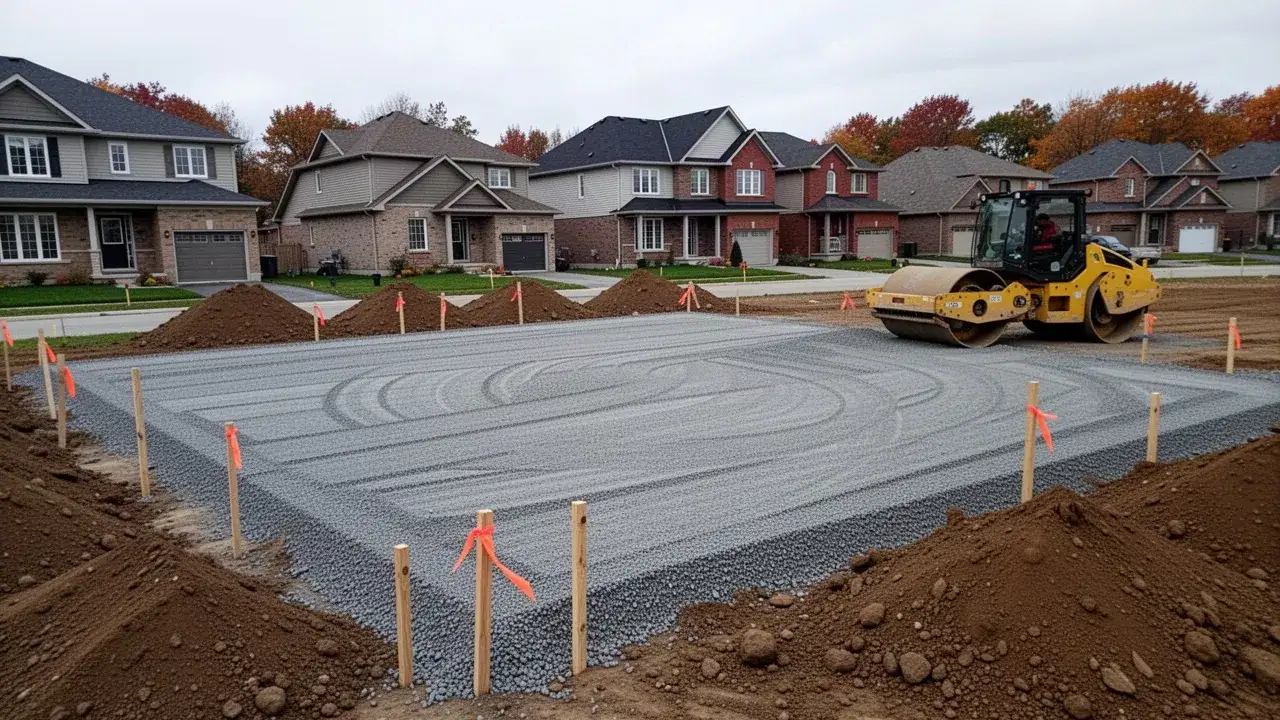
Fennex Cambridge Excavation Pros turns raw land into a build-ready site for builders, developers, general contractors and rural owners across Cambridge and Waterloo Region. We clear, strip, cut, fill and compact so your foundation crew starts on a pad that is at design grade and has passed its density tests.
Our crews have more than 40 years of site work behind them in the sands, gravels and clay tills of the Galt and Waterloo moraines. That experience matters most where plans meet the ground: a cut that turns up wet silt, a fill area that needs more granular than budgeted, or a grading plan that does not match the existing contours.
We are licensed, insured, WSIB covered and hold an IHSA Certificate of Recognition (COR). That gives owners and general contractors the paperwork they need to put us on a regulated job site from day one.
Complete Site Preparation for Residential and Commercial Builds
Site preparation is every earthworks task between bare land and the first footing: clearing, topsoil stripping, cut and fill, compaction, temporary access and sediment control. We deliver it as one package so a single crew owns the elevations from start to finish.
That matters because each step sets up the next. A pad compacted on top of leftover organics or wet clay will settle under a foundation, and no amount of concrete fixes that later.
Residential Building Lots
We prepare custom home lots, rural severances and infill lots where an old house has come down. Infill work in established Cambridge and Kitchener streets means tight access, neighbouring foundations and mature trees that need protection, so we plan machine size and stockpile locations before mobilizing.
On rural lots we also rough in the driveway, the septic area and the well setback so the whole footprint is laid out together. That avoids the common mistake of compacting a pad and then trenching through it for services.
Commercial and Industrial Pads
Warehouses, retail plazas and industrial buildings need larger pads built to a geotechnical report, often with engineered fill placed under full-time testing. We work to the consultant's specifications for subgrade preparation, granular thickness and compaction.
These jobs usually run alongside parking areas, servicing and stormwater work. Our commercial excavation services page covers how we coordinate with general contractors on larger sites.
What Site Preparation Includes
A full site preparation scope runs in five stages, in this order: clearing and grubbing, topsoil stripping, cut and fill, pad compaction, and construction access. Some lots need all five and some arrive already cleared, so we price only what your site needs.
Clearing and Grubbing
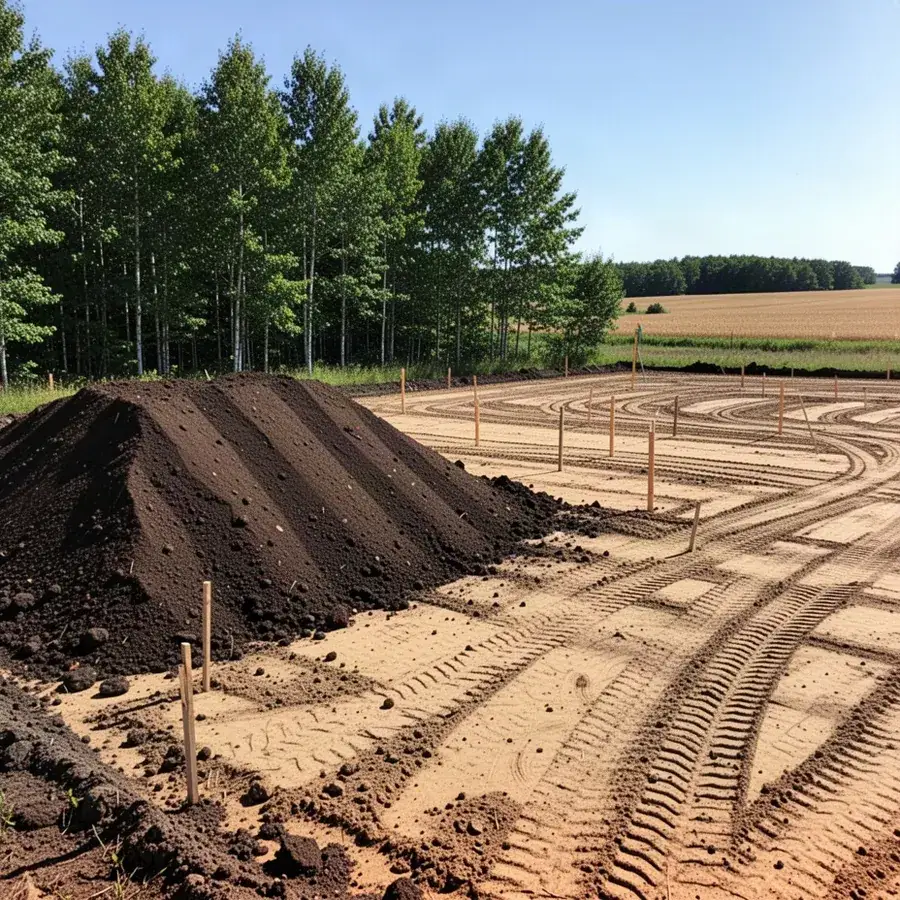
Clearing removes trees and brush, and grubbing pulls out the stumps and root mass so no organics stay under the building. Roots left in place rot and leave voids that show up later as cracked slabs.
Wooded or overgrown lots often need a dedicated crew first. Our land clearing and lot clearing service handles tree removal, stumping and debris haul-away before the earthworks start.
Topsoil Stripping and Stockpiling
Topsoil is stripped from the building, driveway and grading areas because it is too organic and compressible to build on. In Waterloo Region it is usually 150 to 300 mm (6 to 12 in) deep, though old farm fields can run deeper.
We stockpile it on site, away from the dig and the drip line of any trees being kept. That saves you buying topsoil back for final landscaping and keeps the pile out of the way of the foundation crew.
Cut and Fill to Design Grade
Cut and fill means lowering high ground and building up low ground until the site matches the elevations on the engineer's grading plan. We balance cut against fill on site wherever the soil is suitable, which keeps trucking and disposal costs down.
Native clay or silt that is too wet to compact is either dried, set aside for landscaping or replaced with imported granular. We flag that early, because the soil balance is one of the biggest swings in a site preparation budget.
Building Pad Compaction
The building pad is placed in lifts of roughly 200 to 300 mm (8 to 12 in) and compacted to the density the geotechnical report specifies. That is commonly 95% to 100% of Standard Proctor Maximum Dry Density (SPMDD).
Material is typically OPSS Granular B Type I or engineered fill, compacted with a vibratory smooth drum roller on open sites or plate compactors near forms and existing structures. Clay subgrades are proof-rolled first to find soft spots before any granular goes down.
Construction Entrances and Temporary Access
A construction entrance, or mud mat, is a pad of 50 mm clear stone or recycled concrete over filter fabric that knocks mud off truck tires before they reach the road. Municipalities in Waterloo Region expect one on most active sites and will bill the owner for street sweeping if mud tracks out.
We also build temporary access roads for concrete trucks, pump trucks and lumber deliveries. A firm haul road keeps ready-mix trucks from getting stuck on wet spring clay.
Erosion and Sediment Controls Before Earthworks
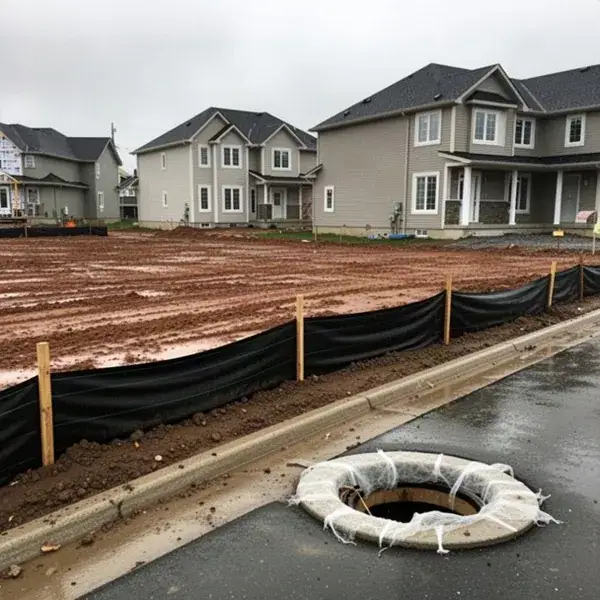
Erosion and sediment controls go in before any soil is disturbed, and on most permitted sites they are a condition of the grading or site plan approval. The usual package is silt fence along the low side of the lot, a construction entrance and protection on any nearby catch basins.
Sites near the Grand River, Speed River or their tributaries may also fall within a Grand River Conservation Authority regulated area. Under O. Reg. 41/24, site grading in those areas counts as development and can need a GRCA permit before work begins.
We install, inspect and repair these controls through the earthworks phase, especially after heavy rain. For larger sites or long exposures, our erosion control service adds measures such as sediment traps, rock check dams and erosion control blankets on slopes.
Our Site Preparation Process
Every site preparation job follows the same four stages, from reading the drawings to handing a certified pad to the next trade. A single-family lot typically moves through all four in one to two weeks of working days.
- 01
Reviewing the Site Plan and Grading Plan
We start by checking the approved site plan and grading plan against what is on the ground. We confirm finished floor and top-of-foundation elevations, drainage swales, and where water, sewer and hydro services enter the lot.
If the drawings and existing grades do not line up, we raise it with the engineer before the first load moves rather than after.
- 02
Locates and Survey Layout
Before any digging we request utility locates through Ontario One Call, which is free and required by law. Owners of buried gas, hydro, telecom and municipal lines must mark them within five business days for a standard request.
Your Ontario Land Surveyor then stakes the building corners and grade points. We set offset stakes so the layout survives the earthworks.
- 03
Earthworks and Compaction Testing
We strip, cut, fill and build the pad in lifts, then a geotechnical firm tests each lift with a nuclear densometer against the Proctor value for that material. A failed test means more passes or reworking the lift before the next one goes on.
These test results are what your building inspector, structural engineer or lender may ask to see. We schedule the testing firm so lifts are not left exposed to rain overnight.
- 04
Handover to the Foundation Crew
The job ends with a pad at design grade, compaction reports on file and a clean, stable access route. From there we can move straight into foundation excavation for the footings and walls.
Keeping both stages with one contractor means nobody argues over whose grades are wrong.
Managing Excess Soil Under O. Reg. 406/19
Soil that leaves a construction site in Ontario is regulated as excess soil under O. Reg. 406/19, On-Site and Excess Soil Management. It must go to an appropriate reuse site or a licensed waste disposal site, not wherever a truck can dump it.
Depending on how much soil is leaving and where it came from, the regulation can require soil sampling by a qualified person, a notice filed on the Excess Soil Registry run by the Resource Productivity and Recovery Authority, and records that track every load. Many smaller residential projects are exempt from the planning steps, but the soil still has to go to a site that is allowed to accept it.
We reduce the problem at the source by balancing cut and fill on site and reusing topsoil in landscaping. When soil must leave, we confirm the receiving site and keep hauling records that show where every load went.
Site Preparation Cost Factors
Site preparation cost depends mostly on how much material moves and whether it moves on site or off it. Most single-lot residential site preparation in Waterloo Region falls roughly between $5,000 and $20,000, while commercial pads are priced per cubic metre and can run much higher. The firm number comes from a free site visit and a look at your grading plan.
The factors that move the price most are:
- Lot size and footprint: a larger pad means more stripping, more granular and more compaction testing.
- Tree cover: a cleared farm field costs far less to prepare than a wooded lot that needs grubbing.
- Soil balance: a site that balances cut and fill is cheapest. Importing granular or exporting surplus clay adds trucking, tipping and possibly excess soil testing.
- Haul distance: every extra kilometre to a reuse site or quarry adds to each truckload.
- Soil conditions: wet silts, high groundwater or buried debris from an old building may need to be dug out and replaced.
- Testing and controls: geotechnical compaction testing, silt fence and construction entrances are separate line items on most quotes.
Our quotes list what is included and what could change the price, such as unsuitable soil found below the stripping depth. That way you are not surprised mid-job.
Why Builders and Developers Hire Fennex for Site Work
Builders hire us because our pads pass compaction testing and our paperwork clears site safety checks. After more than 40 years of local site work, we know where Waterloo Region soils change from free-draining sand to sticky till and how that changes a pad.
- COR certified: our IHSA Certificate of Recognition shows an audited health and safety program, which many general contractors and public owners require.
- WSIB clearance: we can provide a current clearance certificate, so you are not liable for our crew's premiums.
- Licensed and insured: our liability coverage protects your site, neighbours and existing services.
- Long working hours: our office answers seven days a week, until 9:30 pm Monday to Saturday, so schedule changes do not wait until morning.
- One crew, many stages: we carry the site from clearing through grading, backfilling and final grade, which keeps elevations consistent.
We work mostly within about 30 minutes of our Cambridge yard, including site preparation in Kitchener, Waterloo, Guelph and the surrounding townships.
Where We Provide Site Preparation
We provide site preparation from our Cambridge yard to homes, farms and businesses within about a 30-minute drive of Cambridge. Choose your community for local permit, soil and neighbourhood details.
Site Preparation FAQs
What does site preparation include?
Site preparation includes clearing and grubbing, topsoil stripping, cut and fill to design grade, building pad compaction, construction access and erosion controls. The exact scope depends on whether your lot is wooded, sloped or already cleared.
How long does site prep take before construction can start?
Site prep for a typical single-family lot takes about one to two weeks of working days once locates and permits are in place. Wooded lots, wet weather or large volumes of imported fill can stretch that to three or four weeks.
Do you handle excess soil disposal and paperwork?
Yes. We arrange the receiving site, haul the soil and keep load records, and we coordinate sampling or Excess Soil Registry filings with a qualified person when O. Reg. 406/19 requires them.
Can site preparation be done in winter?
Clearing, stripping and rough cut and fill can often continue in winter, and frozen ground can even make access easier. Building pads are the exception, because frozen soil cannot be compacted to spec and must never be buried under a foundation.
Get Your Site Ready to Build
Send us your site plan and grading plan and we will walk the lot, check the soil and give you a clear, itemized quote. We will tell you up front where the risks are, from wet ground to surplus fill.
If your lot only needs shaping and slopes after the build, our grading and levelling service picks up where site preparation leaves off.
- Fennex Cambridge Excavation Pros
- 725 Briardean Rd, Cambridge, ON N3H 4R6
- +1 226-894-8631
- info@fennexexcavation.ca
- Mon to Sat 7:00am to 9:30pm
Sun 9:00am to 9:00pm