Guelph Excavating Contractors
Excavation Services in Guelph, Ontario
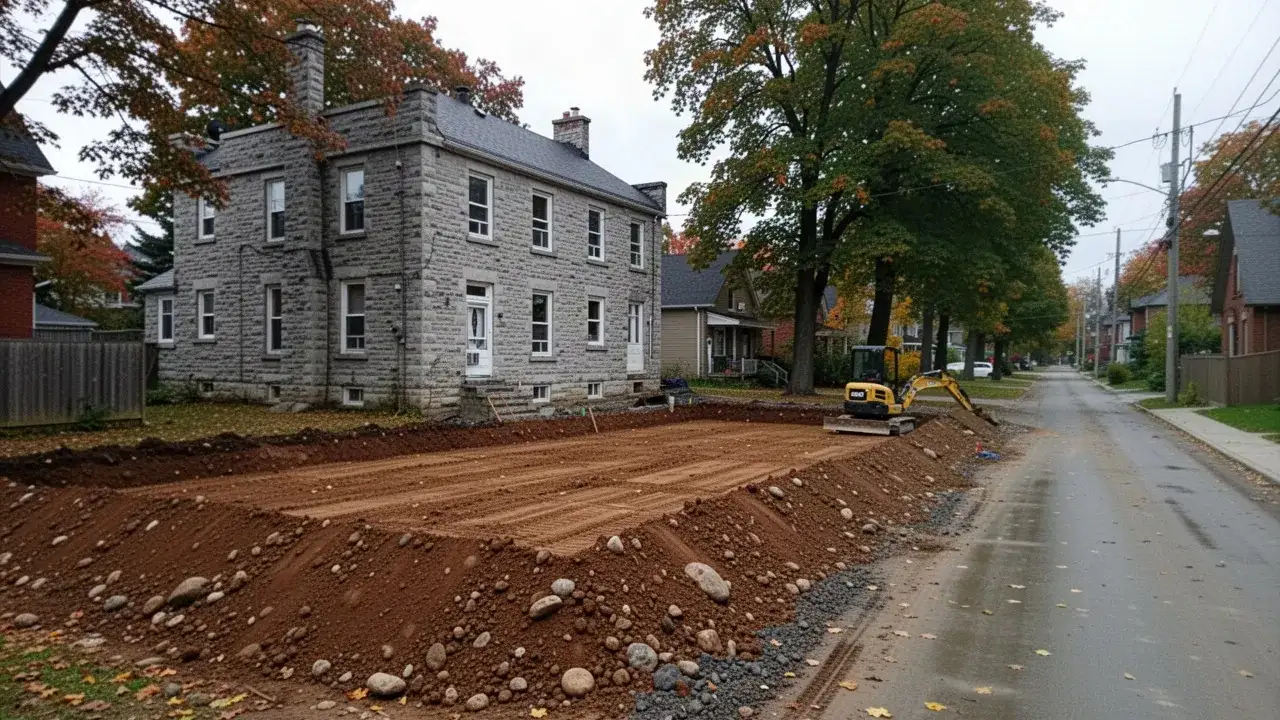
Fennex Cambridge Excavation Pros is an excavating contractor working across Guelph, from limestone cottages near the Speed and Eramosa rivers to newer homes in the south end and rural lots on the city's edge. We dig basements, underpin old foundations, clear teardown lots and open septic beds for Guelph homeowners, builders and property managers.
Guelph ground is not Kitchener ground. Dolostone bedrock sits close to the surface in parts of the city, much of the older housing stands on local limestone, and the city drinks from its own wells, so every dig here starts with a different checklist.
Our crews bring more than 40 years of residential excavation experience, and we are licensed, insured, WSIB covered and COR certified through IHSA. Our yard is on the north side of Cambridge, so most Guelph sites are inside a 30 minute drive.
Digging Through Guelph's Shallow Bedrock
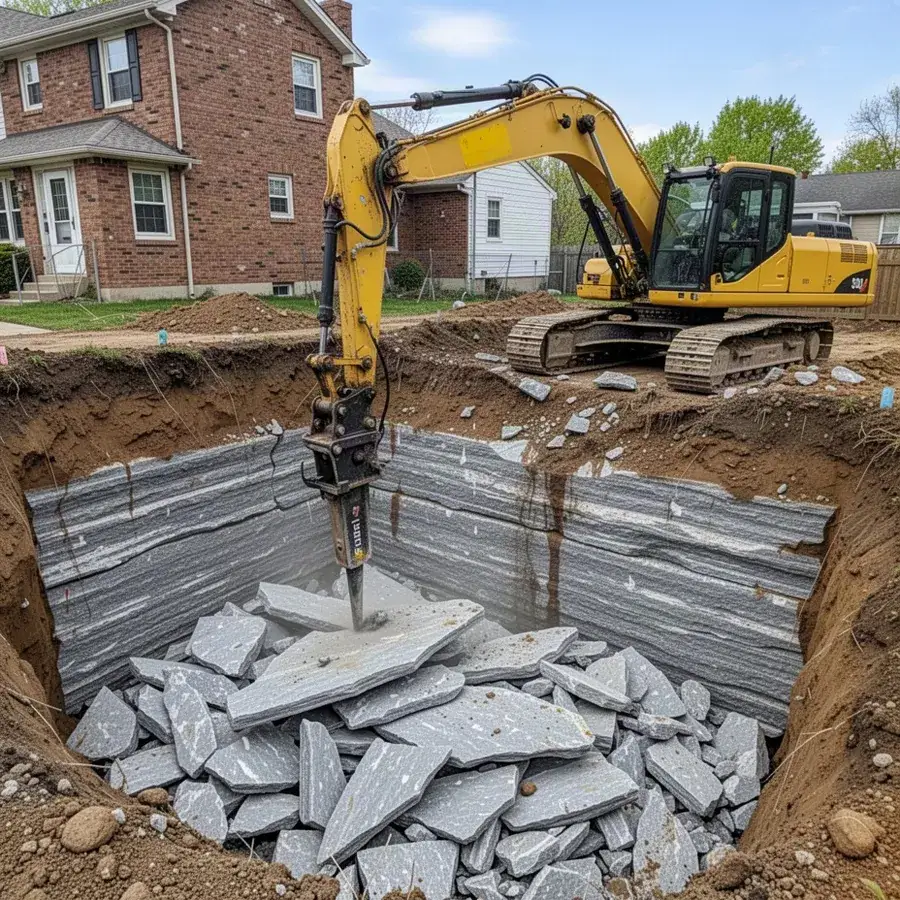
Yes, some Guelph digs hit rock. The city sits on the Guelph Formation, a Silurian dolostone, and in parts of town that bedrock is close enough to the surface to show up in a basement, pool or service trench.
Ground conditions also change from one block to the next. The Guelph drumlin field leaves dense, stony till on its rounded hills, while the Paris and Galt moraines on the southeast side are mostly sand and gravel that drain well but slump in an open cut.
When we reach sound rock, the excavator switches to a hydraulic breaker and fractures the dolostone in lifts before loading it out. Rock breaking is slower and louder than digging soil, so we raise it at the site visit and price it as its own line instead of surprising you mid-job.
- We check nearby Ontario water well records, which often log the depth to bedrock.
- We ask for any geotechnical report or test pits before quoting a full basement.
- We plan vibration around neighbouring stone foundations, which are less forgiving than poured concrete.
- Broken dolostone is hauled off site or, where the plan allows, reused as rough fill below grade.
Neighbourhoods We Serve in Guelph
We work in every part of Guelph, and each area brings its own kind of job. Here is what we tend to run into in four parts of the city.
The Ward and Old University
The Ward, east of downtown across the Speed River, has small lots, narrow streets and houses built close together. There is rarely room to stockpile soil, so we bring a compact machine and truck spoil away the same day.
Old University, between downtown and the University of Guelph campus, has many early 20th century homes on shallow footings. Sewer laterals, basement waterproofing and rear additions are the common calls here.
Exhibition Park and St. George's Park
These tree-lined neighbourhoods north and east of downtown are full of century homes on stone and early concrete foundations. Owners call us to lower basements for ceiling height, dig out wet foundation walls and clear lots for rebuilds.
Mature trees are part of the appeal and part of the planning. Many are big enough to fall under the City's private tree rules, so root zones and access routes get mapped before a machine arrives.
Kortright Hills and Hanlon Creek
Kortright Hills in Guelph's southwest is rolling ground, with many lots backing onto the Speed River valley and Hanlon Creek lands. Slopes make it good walkout and pool territory, but they also move a lot of surface water.
Lots next to valleys and wetlands can fall inside Grand River Conservation Authority regulated areas. We check the GRCA mapping before regrading or digging a pool near a slope.
Westminster Woods and Clairfields
These south-end subdivisions off Gordon Street are mostly 1990s to 2010s homes with poured foundations and engineered lot grading. Typical jobs are pools, egress windows, side-yard drainage and backyard regrading after landscaping has settled.
Side yards here can be 1.2 m (4 ft) or less, so we plan access with mini equipment and ground mats. We also keep new grades matched to the approved lot grading plan so water still drains to the swale and not to a neighbour.
Limestone Homes and Older Foundations
Many of Guelph's oldest homes stand on rubble foundations of local limestone laid in lime mortar, and they need a careful hand when you lower or open up a basement. The same warm grey stone built landmarks such as the Basilica of Our Lady Immaculate and dozens of 19th century houses around downtown.
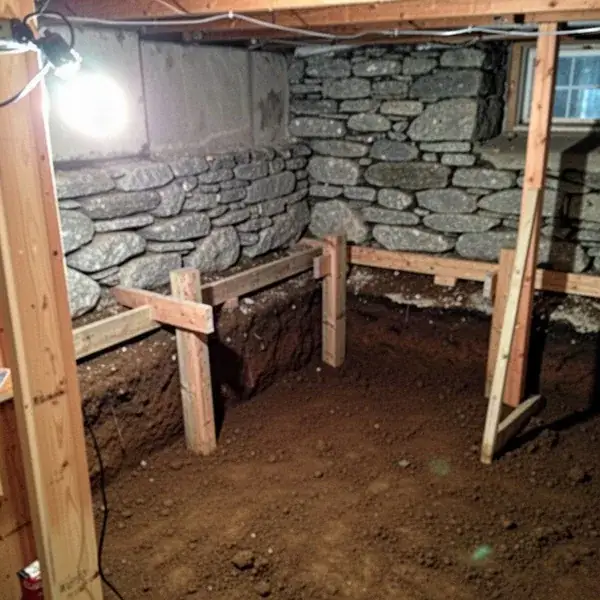
Lowering the floor under one of these walls means underpinning in Guelph done in short, alternating sections so the old wall is never left hanging. An engineer designs the sequence, and the City requires a building permit for altering a foundation.
For a full dig-out, we remove soil through a window opening or a short exterior ramp, dig to the new footing depth and protect the old mortar from vibration. Our basement excavation in Guelph work also covers new weeping tile, a sump pit and clean stone under the slab.
- Rubble walls often have no true footing, so we expose a test section first.
- Soft lime mortar can wash out, so we keep the dig dry and limit how long a face stays open.
- Designated heritage properties may need a heritage permit in addition to the building permit.
- Where we meet bedrock under an old house, rock removal is planned with the engineer before it starts.
Protecting Guelph's Groundwater
Guelph relies almost entirely on groundwater, so excavation here has to keep fuel, poor quality fill and dirty water away from the aquifers. The City's supply comes from more than 20 municipal wells in overburden and bedrock, and the Arkell Spring Grounds and Carter Wellfield in neighbouring Puslinch supply a large share of daily demand.
Inside wellhead protection areas, building permit applications must meet the Guelph-specific policies of the Grand River Source Protection Plan. The City of Guelph source water protection guidance for builders explains the Drinking Water Protection Screening Form and when a risk management plan is needed.
On site, that means we refuel machines away from the open excavation, keep spill kits on hand and only import fill with documented clean sources under O. Reg. 406/19. Water pumped from a wet dig goes through sediment control rather than straight to a catch basin.
City of Guelph Permits and Bylaws
Most Guelph excavation needs at least one City approval before the first bucket goes in. These are the three we deal with most often.
Private Tree Protection Bylaw
Guelph's updated private tree bylaw, passed in April 2025, regulates trees 30 cm or more in diameter on any private lot and trees 10 cm or more on lots larger than 0.2 ha (0.5 acres). Diameter is measured 1.4 m above the ground.
Removing or injuring a regulated tree needs a permit, and the City requires one replacement tree for every 15 cm of diameter removed. The City of Guelph tree bylaw and permit page lists fees and exemptions, such as dead or hazardous trees and invasive species like buckthorn.
Site Alteration Bylaw
Guelph's Site Alteration By-law (2016)-20097 requires a permit from the City Engineer to place or dump fill, remove topsoil or change the grade of a property. It catches projects many owners do not think of as construction, such as raising a backyard or levelling a rural lot.
If your project includes grading and levelling on a Guelph lot, we confirm whether the bylaw applies and size the job so the paperwork matches what we actually move.
Permits From Guelph Building Services
Building permits in Guelph are applied for online through the Guelph Permit and Application System (GPAS). The City lists underpinning, additions, decks, pools and most demolitions as work that needs a permit, with a review time of about 10 business days once fees are paid.
We work from the stamped drawings and schedule the dig around required inspections. Before any digging, we also register locates through Ontario One Call so every buried service is marked.
Excavation Services Guelph Homeowners Ask For
These four jobs make up most of our Guelph calls. Each one has a Guelph twist that changes how we plan it.
Basement Excavation and Underpinning
Owners of older Guelph homes usually want more ceiling height, a dry basement or space for a second unit. We dig the floor down, underpin or bench the footings as the engineer specifies, and leave a clean stone base ready for the slab.
Interior dig-outs in tight neighbourhoods are often done with a conveyor through a basement window. That keeps machines off the lawn and soil moving straight into the truck.
Teardowns and Demolition in Guelph
We handle demolition in Guelph for tired bungalows, garages and outbuildings, then dig the new foundation on the same mobilization. Utilities are disconnected first, and the City demolition permit has to be in place before we start.
If a house is listed on Guelph's municipal heritage register, the Ontario Heritage Act requires 60 days' notice to the City before demolition. We ask about heritage status early so it does not stall your schedule.
Septic Systems on Guelph's Rural Edge
Homes just outside the city limits in Puslinch and Guelph/Eramosa rely on private septic systems rather than city sewers. We provide septic system excavation around Guelph, including tank holes, leaching bed trenches and imported sand for raised beds.
Septic permits for these properties come from the local township building department, not the City of Guelph. Systems close to the Arkell and Carter well fields may face added source protection review.
Residential Excavation for Additions
Rear additions and detached garages are among the most common residential excavation jobs we do in Guelph. Footings go below the frost line, typically about 1.2 m (4 ft) deep, on undisturbed native soil or rock.
On small lots we plan where every load of soil goes before we dig, so the yard is not buried and the neighbour's fence stays standing.
From Cambridge to Guelph in About 30 Minutes
Central Guelph is about 25 to 30 minutes from our Cambridge yard. Our usual route is Highway 401 east to the Hanlon Expressway, then north into the city.
South-end sites near Clair Road and Gordon Street are usually the quickest to reach, while the north end takes longer once the Hanlon traffic builds. We schedule machine moves early in the morning to stay ahead of that traffic.
Being this close means we can return the next morning for a follow-up inspection or backfill without charging you for a long haul.
Our Guelph Service Area
Fennex crews reach most Guelph job sites in about 25 to 30 minutes from our yard at 725 Briardean Rd in Cambridge, and we are open seven days a week.
Homeowners and builders here rely on our residential excavation services, while developers, property managers and contractors book our commercial excavation services.
See every community we cover on our excavation service areas page.
Guelph Excavation FAQs
Will you hit bedrock digging a basement in Guelph?
It depends on where the house sits. Some Guelph neighbourhoods have dolostone within basement depth, while others have several metres of till or sand and gravel over the rock.
If we expect rock, we say so at the site visit and price hydraulic breaking separately. Water well records and test pits help us narrow the risk before you commit.
Do I need a tree permit before excavating in Guelph?
You need one if the dig will remove or injure a regulated tree. Under the 2025 bylaw, that means any tree 30 cm or more in diameter on any lot, or 10 cm or more on lots larger than 0.2 ha.
Root damage counts as injury, so a trench through a big tree's root zone can trigger the permit even if the tree stays. We flag those trees before work starts.
Do you do underpinning in Guelph?
Yes. We carry out the excavation for underpinning and basement lowering in Guelph, including under older limestone and rubble foundations.
Every underpinning job follows an engineer's design and a City building permit, and we dig in alternating sections so the house stays supported.
Do you install septic systems near Guelph?
Yes, we handle septic excavation on rural properties around Guelph, mostly in Puslinch and Guelph/Eramosa. The city itself is largely on municipal sewer.
Each system needs a design that meets Part 8 of the Ontario Building Code and a permit from the township building department. We work to that approved design and schedule the inspection before backfill.
Book Your Guelph Excavation
Whether it is a limestone basement in The Ward, a pool in Kortright Hills or a teardown in Exhibition Park, we will walk the site, check for rock, trees and permits, and give you a clear written quote.
Call or send us your Guelph address and project details, and we will book a free site visit at a time that suits you.
- Fennex Cambridge Excavation Pros
- 725 Briardean Rd, Cambridge, ON N3H 4R6
- +1 226-894-8631
- info@fennexexcavation.ca
- Mon to Sat 7:00am to 9:30pm
Sun 9:00am to 9:00pm