Driveway Base and Gravel Specialists
Driveway Excavation and Gravel Driveway Installation in Cambridge, ON
Fennex Cambridge Excavation Pros digs out driveways, builds the granular base underneath them and installs finished gravel driveways for homes and farms around Cambridge. With more than 40 years of excavation behind us, we know that what holds up a driveway is the 300 to 450 mm (12 to 18 in) of material you never see.
Homeowners call us before a new asphalt, concrete or interlock driveway goes in, and rural owners call when a long lane has turned into ruts and puddles. Paving and interlock contractors also hire us to handle the excavation and base so their crew arrives to a graded, compacted surface.
Driveways in Waterloo Region face clay soils, spring thaw and road salt every year. We build bases with the right depth, geotextile fabric and Granular A compacted in lifts so the surface does not rut, sink or heave after the first winter.
Our Driveway Excavation and Preparation Services
Our driveway excavation service covers everything from the first cut to a finished base or gravel surface: digging out old material, laying fabric, placing and compacting granular, and shaping the final grade. It suits new homes, driveway replacements, widenings and rural lanes.
If an old concrete or asphalt driveway is in the way, our concrete breaking and removal service takes it out and recycles it before the new base goes in.
Base Preparation for Asphalt, Concrete and Pavers
Most driveway failures start in the base, not the surface. We excavate to the depth the finished surface needs, install fabric over clay, and place and compact Granular A to a grade the paver, concrete finisher or interlock installer can work to.
For interlocking pavers we leave the base at the right elevation for the bedding layer. For poured concrete we confirm the slab thickness and any forming allowance with the finisher first.
New Gravel Driveway Installation
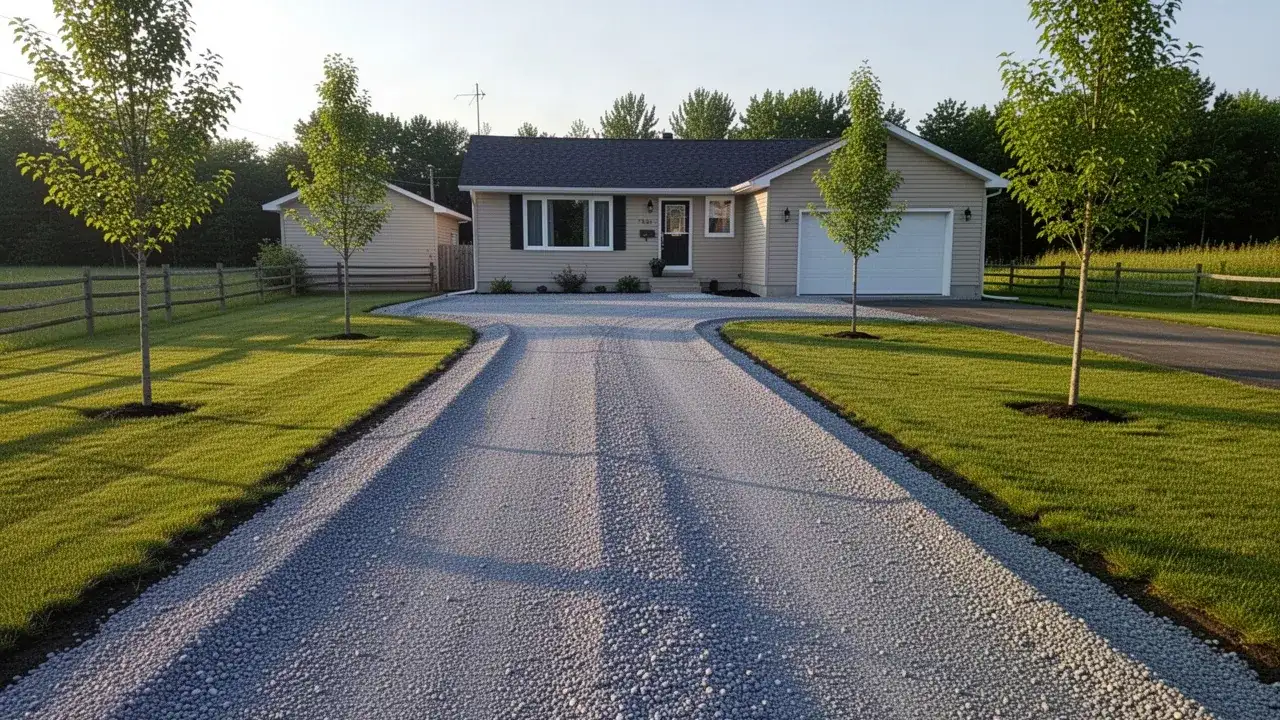
A properly built gravel driveway is a full granular structure, not a load of stone dumped on the lawn. We strip the topsoil, lay fabric, place Granular B on longer or heavier-use driveways, then finish with compacted Granular A shaped with a crown.
The result is a firm, well-drained surface that handles cars, pickups and delivery trucks with only occasional top-ups.
Driveway Widening and Extensions
Widening a driveway for a second car or adding a parking pad means cutting back lawn and building a new base that ties into the existing one. We match the new base depth to the old so the seam does not sink or crack once it is paved.
In most cities a widening also needs zoning and curb cut checks, covered further down this page.
Gravel, Asphalt, Concrete or Pavers: Choosing a Driveway Surface
Gravel is the cheapest driveway surface to install, asphalt is the most common in Waterloo Region, and concrete and pavers cost more but can last longer. In Ontario's freeze-thaw climate, the base under each one matters as much as the surface you choose.
- Gravel: lowest cost and easy to repair, but needs periodic regrading and new stone, and plowing can push stone onto the lawn
- Asphalt (typically HL3 surface mix): a flexible surface that tolerates some frost movement, often lasting 15 to 25 years with crack filling and sealing
- Concrete: rigid and long lasting, but de-icing salt can cause surface scaling and cracks appear if the base moves
- Interlocking pavers: individual units that flex with frost and can be lifted and relaid, at the highest upfront cost
Whatever surface you choose, the excavation depth and granular base we build is set to suit it. We do not install the asphalt, concrete or pavers ourselves; we prepare the base so your surfacing contractor can.
What Goes Under a Driveway That Lasts
A driveway that lasts sits on four things: enough excavation depth, a fabric separator, compacted Granular A and a shape that sheds water. Skip any one of them and you get ruts, potholes, sinking edges or frost heave.
Excavation Depth
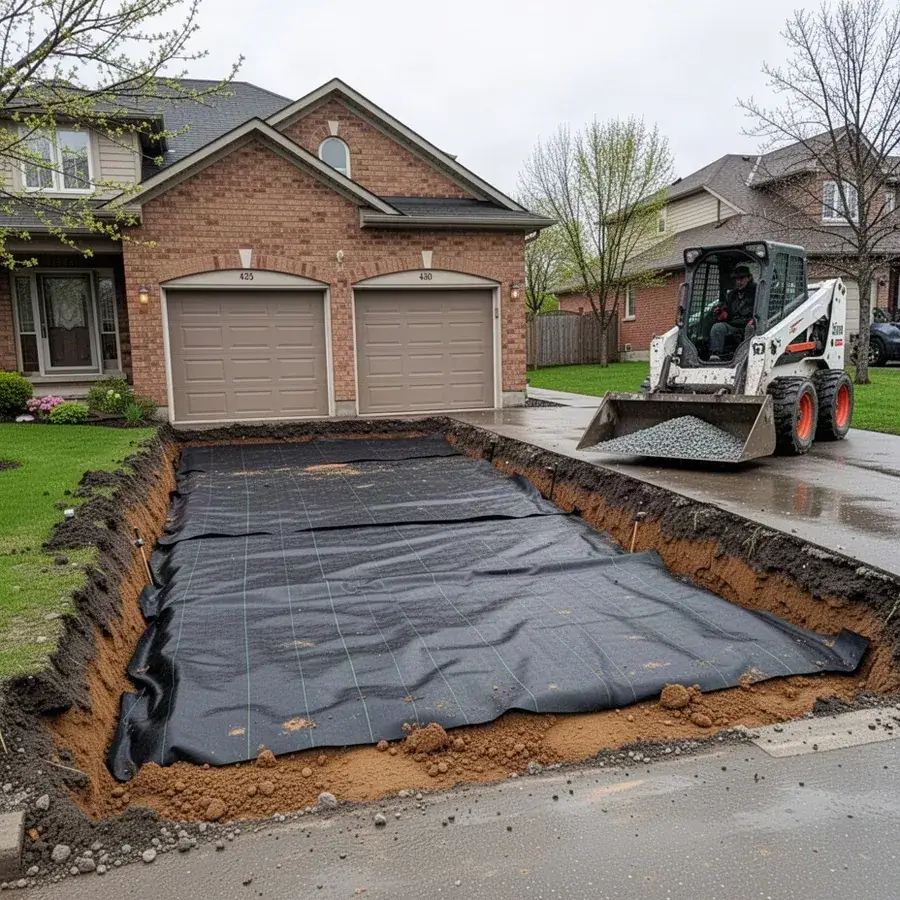
We remove all topsoil, organics and soft fill down to firm native soil, usually 300 to 450 mm (12 to 18 in) below finished grade for cars. Driveways that carry RVs, boat trailers, oil trucks or farm equipment typically go 450 to 600 mm (18 to 24 in).
Topsoil left under a driveway rots and compresses, which is the most common reason a cheap driveway sinks.
Geotextile Fabric
A non-woven geotextile laid on the excavated clay keeps the gravel from pressing into the soil and the clay from working up into the gravel. Without it, a clay subgrade slowly swallows the base and the driveway loses thickness every spring.
On sandy or gravelly soils, such as parts of the Galt and Paris moraines, fabric is sometimes optional.
Granular A and Compaction
Granular A is a 19 mm crushed stone with fines that compacts into a hard, interlocking layer. We place it in lifts of 100 to 150 mm (4 to 6 in) and compact each lift with a vibratory plate or roller, wetting it if needed to reach full density.
On deeper bases, Granular B goes down first as the subbase, with 150 mm (6 in) of Granular A on top.
Crown and Drainage
The finished surface is shaped with a slight crown or cross slope, roughly 2 percent, so rain and meltwater run off rather than soak in. The driveway must also slope away from the garage and house, with water directed to a lawn, swale or ditch, not a neighbour's yard.
Standing water is the main cause of potholes in gravel driveways.
Our Driveway Installation Process
Most residential driveway excavations and gravel installs take 1 to 3 days on site. Here is how the work runs from layout to finished surface.
- 01
Measure, Locates and Layout
We measure the area, confirm the finished elevations at the garage and the street, and mark lines and grades with paint and stakes. Utility locates are requested through Ontario One Call, because gas services, water services and cable lines often run under driveways.
This is also when we confirm any widening or curb cut permits are in hand.
- 02
Excavation and Haul-Away
We dig out the old surface, topsoil and soft material to the planned depth with a compact excavator or skid steer, loading directly into dump trucks. Clean excavated soil is reused or hauled to an appropriate receiving site, and old asphalt or concrete goes to a recycler.
Edges are cut square so the new base has firm sides.
- 03
Base Placement and Compaction
Fabric goes down first, followed by Granular B where needed and then Granular A, each placed in lifts and compacted. We check grades with a laser level as we go so the finished base matches the planned elevations and slopes.
A well-compacted base should show no movement under a loaded truck.
- 04
Finish Gravel or Handoff for Paving
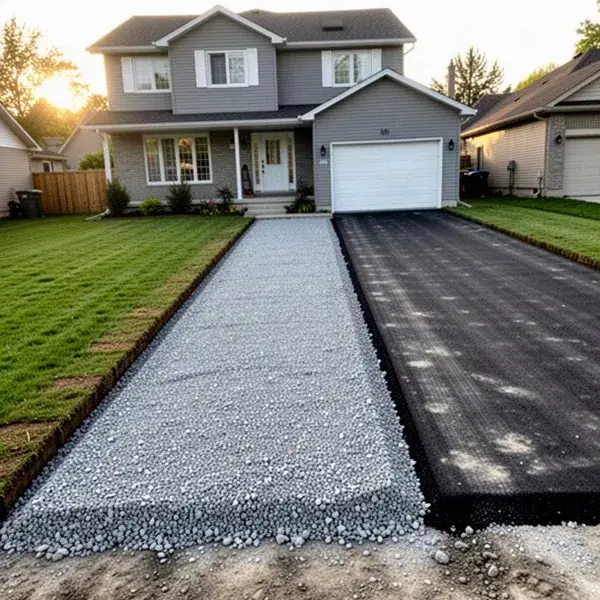
For a gravel driveway, we finish with a final lift of Granular A, shape the crown and roll it tight. For a paved driveway, we leave a fine-graded, compacted base at the elevation your asphalt, concrete or interlock contractor specifies.
We are happy to coordinate dates directly with your surfacing contractor.
Driveway Widening Rules and Curb Cut Permits
In Cambridge, Kitchener and Waterloo, widening a driveway is controlled by each city's zoning by-law, and changing the curb cut usually needs a separate permit. Zoning typically limits how much of the front yard a driveway can cover and how wide it can be, so a widening that looks reasonable can still break the rules.
The curb cut is the lowered section of curb and the apron across the city boulevard. Widening it generally means applying to the city's transportation or engineering department, and the city may require its own contractor or specifications for work in the road allowance.
We recommend checking with the city before booking any widening. We can measure your lot and give you the dimensions you will need for the application, and we only dig once you have confirmed the widening is allowed.
Rural Driveways, Entrances and Culverts
Rural driveways need an entrance permit from whichever authority owns the road, and most need a culvert where they cross the roadside ditch. In Waterloo Region that might be the Region of Waterloo for regional roads or the township for local roads, such as Woolwich or Wilmot. In Puslinch, Wellington County handles county roads and the township handles its own.
The road authority usually sets the culvert size, length and material, often corrugated steel or HDPE, along with sightline and entrance width requirements. We install the culvert on proper bedding with enough cover to carry trucks, then build the driveway over it.
Long rural lanes also need their own ditching or swales so water does not run down the driveway. That work ties into our drainage excavation service, and we regularly build rural lanes in Puslinch and the surrounding townships.
Driveway Excavation Cost Factors
Driveway excavation cost is driven mainly by size, depth and how much material has to come out and go back in. As a general guide, a new gravel driveway for a typical single-family home in Waterloo Region often runs a few thousand dollars, while long rural lanes and deep bases for heavy vehicles cost more.
- Area: length and width of the driveway or widening
- Depth: a 300 mm car driveway versus a 600 mm base for heavy equipment
- Materials: fabric, Granular B, Granular A and any top dressing
- Removal: old asphalt, concrete or interlock to break and recycle
- Haul-away: trucking and receiving fees for excavated soil
- Access: tight side yards, overhead wires or slopes
- Culverts and permits: rural entrances, culvert pipe and permit fees
You get a firm written quote after a free site visit, with base depths and material quantities listed.
Where We Provide Driveway Excavation and Preparation
We provide driveway excavation and preparation from our Cambridge yard to homes, farms and businesses within about a 30-minute drive of Cambridge. Choose your community for local permit, soil and neighbourhood details.
Gravel Driveway FAQs
How deep should a gravel driveway base be?
A gravel driveway for cars should have about 300 to 450 mm (12 to 18 in) of total compacted granular over firm soil. For heavy trucks, RVs or farm equipment, plan on 450 to 600 mm (18 to 24 in), usually Granular B with Granular A on top.
What is the best gravel for a driveway in Ontario?
Granular A is the best all-round driveway gravel in Ontario because its mix of crushed stone and fines compacts into a firm surface. Clear stone and pea gravel look tidy but do not lock together, so they rut and spread under tires.
How much does a gravel driveway cost?
Most residential gravel driveways cost a few thousand dollars, with longer rural lanes and deep bases costing more. Length, depth, soil conditions and haul-away set the price, and we confirm it with a free site visit.
Do I need a permit to widen my driveway?
In most cities, yes. Cambridge, Kitchener and Waterloo regulate driveway width through zoning, and widening the curb cut usually needs a permit from the city.
Get Your Driveway Started
A driveway is only as good as what is under it. Book a free site visit and we will measure, check your soil and lay out a base that suits the surface you want.
Replacing an old driveway? We break out and recycle the existing slab through our concrete breaking and removal service and build the new base in the same visit.
- Fennex Cambridge Excavation Pros
- 725 Briardean Rd, Cambridge, ON N3H 4R6
- +1 226-894-8631
- info@fennexexcavation.ca
- Mon to Sat 7:00am to 9:30pm
Sun 9:00am to 9:00pm