Soil Remediation Excavation
Environmental Excavation and Soil Remediation in Cambridge, ON
Fennex Cambridge Excavation Pros is the excavation contractor that physically removes contaminated soil, buried fuel tanks and impacted fill across Cambridge and Waterloo Region. We work under the direction of your environmental consultant, who defines what comes out and confirms when the site is clean.
Our remediation calls come from homeowners dealing with a heating oil leak, buyers and lenders who found a problem during a property sale, and developers redeveloping former gas stations, garages and factories. Each one needs the dirty soil out, kept separate from the clean soil, and documented all the way to an approved disposal site.
With more than 40 years of local excavation experience, an IHSA Certificate of Recognition (COR) and full WSIB coverage, we bring the safety discipline that contaminated sites demand. You get careful digging, clean records and a restored property.
Our Environmental Excavation Services
Environmental excavation is the removal of soil, fill or buried structures that contain contaminants above Ontario's soil standards. Remediation is the larger process of finding, removing and confirming the cleanup, and excavation is the most common and most certain way to do it.
We focus on the field work: digging, segregating, loading, backfilling and restoring. Testing, reporting and regulatory sign-off stay with your environmental consultant, which keeps the work independent and defensible.
Contaminated Soil Removal
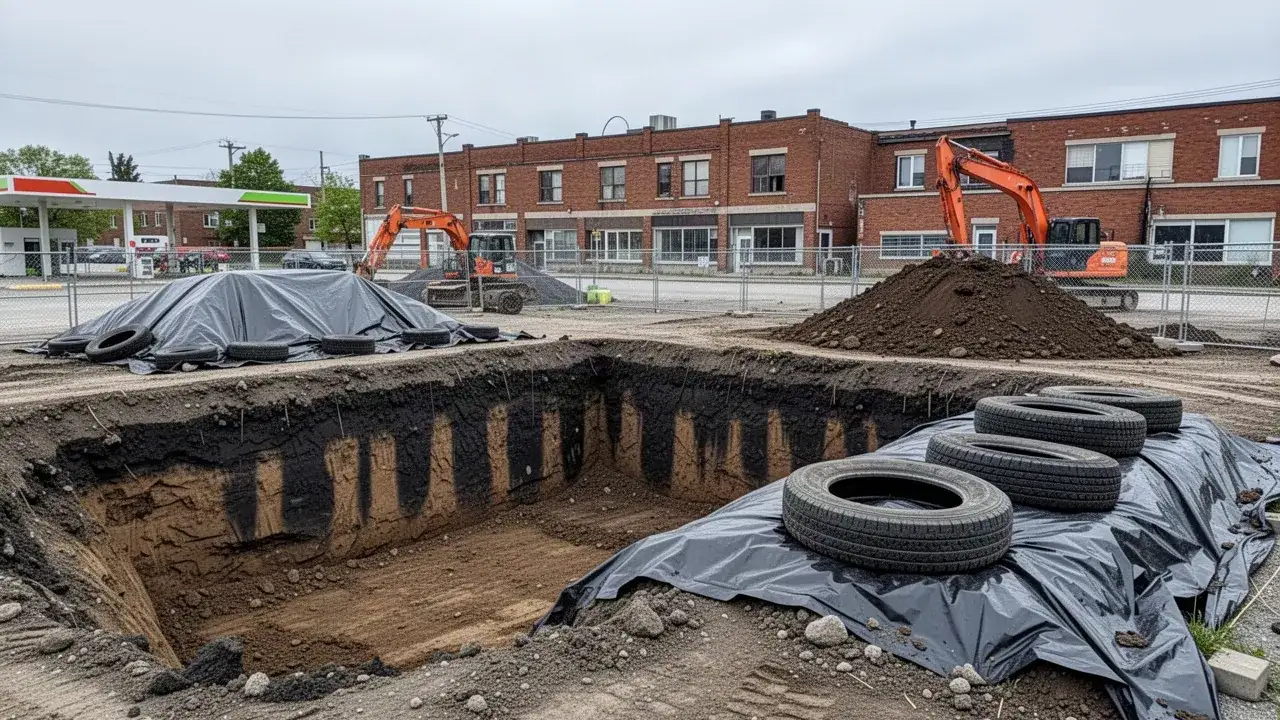
Contaminated soil removal means excavating impacted soil to the limits your consultant sets and sending it to a facility licensed to accept it. We dig in controlled cuts, stop at each sampling point, and keep impacted and clean material in separate, covered stockpiles.
Typical jobs range from a few cubic metres under a residential tank to several hundred cubic metres on a commercial redevelopment.
Buried Heating Oil Tank Removal
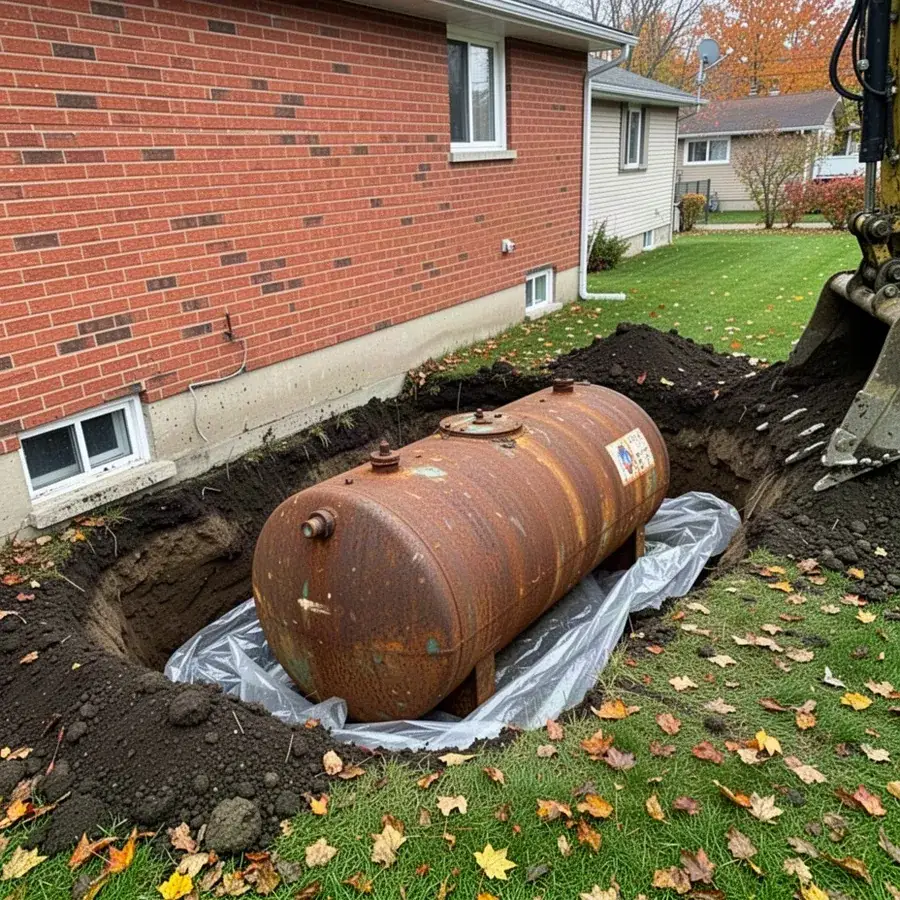
Oil tank removal is the most common environmental job on residential lots in older neighbourhoods. We expose the tank, coordinate the pump-out of remaining oil, lift the tank out intact, and let your consultant inspect and sample the soil before we backfill.
If the soil is clean, the hole is backfilled the same day. If it is not, the excavation simply continues as a soil remediation job.
Brownfield Site Excavation
Brownfields are former industrial or commercial properties where past use may have left contamination, like old service stations, dry cleaners, foundries and rail yards. Cambridge's long manufacturing history along the Grand and Speed rivers means many redevelopment sites carry historic fill.
We excavate brownfields alongside regular site works, often after our commercial demolition service has cleared the buildings and slabs.
Common Contaminants We Excavate
Most contaminated soil we dig in this region falls into three groups: fuel-related hydrocarbons, residential heating oil, and historic industrial fill. Your consultant identifies the contaminant through lab testing, and that result decides how the soil is handled and where it goes.
Petroleum Hydrocarbons From Leaking Tanks
Petroleum hydrocarbons, reported by labs as PHC fractions F1 to F4, come from gasoline, diesel and heating oil that leaked from tanks or lines. Lighter fuels often bring BTEX compounds (benzene, toluene, ethylbenzene and xylenes) with them.
These contaminants smell and stain the soil, which helps guide digging, but only lab results confirm where the impact ends.
Heating Oil Spills Under Homes
Residential spills come from corroded buried tanks, leaking indoor tanks in basements, and failed fill or vent pipes. Oil can soak through a basement floor or travel along weeping tile, so impacted soil is sometimes found under footings and slabs.
Where digging near or below a foundation is needed, we plan the cut with the consultant and an engineer so the house stays supported.
Industrial Fill and Metals
Older commercial sites often sit on historic fill containing cinders, ash, brick and slag. That fill can carry metals such as lead, zinc and arsenic, plus polycyclic aromatic hydrocarbons (PAHs) from coal and asphalt waste.
Fill like this is often discovered during excavation for something else, so we stop and call the consultant as soon as we see it.
Working With Your Environmental Consultant
Your environmental consultant leads the investigation and decides the cleanup limits, and Fennex carries out the excavation to their direction. This split keeps the person testing the soil independent from the person paid to remove it.
Most projects begin with a Phase One Environmental Site Assessment, a records review and site visit that looks for possible sources of contamination. If concerns are found, a Phase Two assessment drills boreholes and test pits and sends samples to an accredited lab.
When a property changes to a more sensitive use, such as industrial to residential, Ontario's Records of Site Condition regulation, O. Reg. 153/04, applies. A Qualified Person, a licensed engineer or geoscientist, must sign off that the site meets the applicable soil standards before the Record of Site Condition is filed.
Underground Oil Tank Removal
An unused buried oil tank should be removed, not left in place, because steel tanks corrode and leak over time. Homes built before natural gas reached their street, common in older parts of Cambridge, Kitchener and Guelph, are the most likely to have one.
TSSA Rules for Fuel Oil Tanks
In Ontario, fuel oil tanks fall under the Technical Standards and Safety Authority (TSSA) and the fuel oil regulation, O. Reg. 213/01, which adopts the CSA B139 installation code. Underground tanks that are out of service are expected to be removed, and tank work must be done by a TSSA-registered fuel oil contractor.
We handle the excavation and restoration while working with a registered fuel oil contractor and your environmental consultant, so each part of the job is done by the right licence holder.
Removing a Tank Before a Sale or Insurance Renewal
The two most common triggers are a property sale and an insurance renewal. Buyers, lenders and insurers often ask about oil tanks, and many insurers will not cover a home with an old buried tank in place.
Removing the tank before listing, with a consultant's soil report in hand, turns an unknown risk into a clean document for the buyer.
Our Remediation Excavation Process
Every remediation dig follows the same five stages, from the consultant's plan to a restored site. Small residential tank jobs can be done in one to two days, while larger commercial cleanups take one to several weeks.
- 01
Delineation and Excavation Plan
Your consultant uses borehole and test pit data to delineate the impacted area, meaning they map how far and how deep the contamination extends. Together we turn that into an excavation plan with limits, stockpile areas, truck routes and any shoring needs under O. Reg. 213/91.
Locates through Ontario One Call are completed before any digging starts.
- 02
Segregating Clean and Impacted Soil
We strip and stockpile clean topsoil and overburden first, then excavate impacted soil into a separate pile on polyethylene sheeting. Piles are covered to keep rain from spreading contamination or creating contaminated runoff.
Keeping these streams separate is the single biggest cost saver on a remediation job, because clean soil is cheap to reuse and impacted soil is expensive to dispose of.
- 03
Confirmatory Sampling
When we reach the planned limits, the consultant samples the walls and floor of the excavation. If any sample exceeds the standard, we cut further in that direction and they resample.
Backfilling only starts once the consultant confirms the remaining soil meets the cleanup criteria.
- 04
Licensed Haulage and Disposal
Impacted soil is loaded onto licensed haulers and taken to a landfill or soil treatment facility approved to accept it. Soil classed as hazardous waste travels under a manifest through Ontario's Hazardous Waste Program Registry, while non-hazardous contaminated soil moves with weigh tickets and bills of lading.
Every load is recorded, so the paperwork matches the tonnage your consultant reports.
- 05
Clean Backfill and Restoration
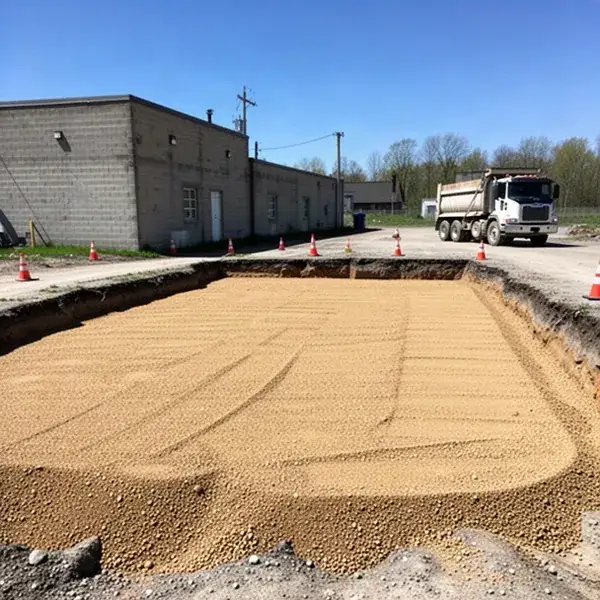
We backfill with clean imported fill or granular material with documentation that it meets the standards for the site, compacting it in lifts to prevent settlement. Our backfilling and compaction service follows the same lift-by-lift approach used under foundations and driveways.
The site is then restored with topsoil and seed, granular for a future building, or a base ready for paving.
Excess Soil Rules and Disposal Records
Ontario's On-Site and Excess Soil Management regulation, O. Reg. 406/19, controls where soil leaving a construction site can go. It applies to clean excess soil too, not just contaminated material.
Depending on the project's size and history, the owner may need an assessment of past uses, a sampling and analysis plan, a soil characterization report and a notice filed in the Excess Soil Registry run by the Resource Productivity and Recovery Authority (RPRA). Each load leaving the site must be tracked to a reuse site or a facility allowed to receive it.
This documentation protects you as the owner. If soil from your site turns up illegally dumped somewhere, the paper trail shows you did things properly, and we keep our load records organized so your consultant can close the file.
Remediation Cost Factors
Remediation cost depends mostly on how much impacted soil comes out and what it costs to dispose of it. Disposal and trucking often make up more than half the total on a contaminated soil job.
- Volume: every additional cubic metre means more digging, trucking, disposal and clean backfill.
- Contaminant type: petroleum-impacted soil usually goes to a treatment facility, while hazardous waste costs more to haul and receive.
- Disposal fees: receiving facilities charge by the tonne, and rates vary by contaminant level and distance from the site.
- Testing: consultant time and lab analysis, including rush turnaround for confirmatory samples, are separate from excavation.
- Access and depth: digging next to a foundation, under a deck or below the water table can require shoring, hand digging or dewatering.
- Restoration: replacing a driveway, patio or landscaping after the dig adds to the total.
Because the final volume is unknown until confirmatory sampling is done, most remediation jobs are priced with unit rates per tonne or cubic metre. We give you those rates up front so you can track the cost as the dig progresses.
Where We Provide Environmental Excavation and Remediation
We provide environmental excavation and remediation from our Cambridge yard to homes, farms and businesses within about a 30-minute drive of Cambridge. Choose your community for local permit, soil and neighbourhood details.
Environmental Excavation FAQs
How much does oil tank removal cost in Ontario?
A straightforward buried residential oil tank removal with clean surrounding soil often costs roughly $2,500 to $6,000 in Ontario, including excavation, pump-out, disposal and backfill. If the soil is contaminated, costs rise with the volume removed and can reach tens of thousands of dollars.
These are general ranges; we give a firm price after a site visit and a look at the consultant's findings.
Who decides how much soil needs to be removed?
Your environmental consultant decides, based on lab results from soil samples. We excavate to their limits, they test the walls and floor, and digging stops only when the results meet the cleanup standard.
What is a Record of Site Condition?
A Record of Site Condition (RSC) is a document filed in Ontario's Environmental Site Registry confirming that a property meets the soil and groundwater standards for its intended use. It is required under O. Reg. 153/04 when land changes to a more sensitive use, and it must be prepared by a Qualified Person.
Does home insurance cover an oil spill cleanup?
It depends on your policy. Some home insurance policies cover sudden, accidental oil leaks with a limit, while others exclude fuel oil spills or gradual leaks entirely.
Call your insurer before work starts, and keep every invoice, lab report and disposal ticket from the cleanup for the claim.
Talk to Us About Your Remediation Project
Whether you are a homeowner with a leaking oil tank or a consultant who needs a dependable excavation contractor on a brownfield, we are ready to help. Send us the Phase Two report or a description of the problem, and we will give you a clear plan and unit rates.
Redeveloping a site with buildings still standing? We can also handle the demolition and site clearing before remediation so one crew carries the job from teardown to clean backfill, from Guelph to Cambridge.
- Fennex Cambridge Excavation Pros
- 725 Briardean Rd, Cambridge, ON N3H 4R6
- +1 226-894-8631
- info@fennexexcavation.ca
- Mon to Sat 7:00am to 9:30pm
Sun 9:00am to 9:00pm