Rural Septic Excavation
Septic System Installation and Excavation in Waterloo Region and Wellington County
Fennex Cambridge Excavation Pros excavates for and builds septic systems on rural properties across Waterloo Region and Wellington County. That includes digging test pits, setting septic tanks, and constructing leaching beds exactly to the designer's drawings. We have been moving earth around the Cambridge area for more than 40 years.
Our septic calls come from three groups: rural homeowners whose bed has started to fail, buyers whose purchase hinges on a failed septic inspection, and builders putting a new home on an unserviced lot in the townships. Each needs a system that passes inspection the first time and lasts for decades.
Every system in Ontario is governed by Part 8 of the Ontario Building Code, from soil testing and setbacks to tank size and bed construction. We work with your designer and the local building department so the permit, the layout on the ground and the inspection all line up.
Our Septic System Excavation Services
We handle the heavy, precise part of septic work: excavation, tank placement, bed construction, backfill and grading. A qualified septic designer evaluates the site and prepares the design and permit application, and we build what that design calls for.
That split matters because a septic system only works if it is built exactly as designed. Bed elevations, stone depths and pipe spacing that drift on site are a common reason new systems fail inspection or fail early.
On new builds we often clear the bed area first with our land clearing crew and run the building sewer from the house to the tank as part of the same job.
New Septic System Installation
New septic installation is for unserviced lots where a home is being built, or rural homes adding a second dwelling or major addition that changes the design flow. The system is sized from the number of bedrooms and fixtures in the home.
We dig and set the tank, build the leaching bed, connect the house sewer and leave the area graded and ready for seed.
Septic Tank Replacement
A tank needs replacing when its walls are cracked, the baffles have rotted out, or a steel tank has rusted through. We remove or properly decommission the old tank by pumping it out and then removing it or filling it with clean granular material.
The new tank is precast concrete or high-density polyethylene, sized to Code. A residential tank must have at least 3,600 L of working capacity, and more for larger homes.
Leaching Bed Replacement
Septic bed replacement is the most common job we see on older rural properties. When the soil under the bed has clogged with biomat and can no longer absorb effluent, the bed has to be rebuilt, often in a new location on the lot.
Leaching bed replacement usually keeps a sound existing tank, which reduces cost. The designer decides whether the original area can be reused or whether the new bed needs fresh ground.
Signs Your Septic System Is Failing
Wet ground over the bed, sewage odours and slow drains throughout the house are the clearest signs a septic system is failing. A failed inspection during a sale is the other common way owners find out.
Wet Ground, Lush Grass or Odours Over the Bed
When the soil below a leaching bed stops absorbing, effluent rises toward the surface. You see spongy ground, standing water or grass that stays unusually green and thick over the distribution pipes.
A sewage smell near the bed or tank, especially after laundry day, confirms it. Surfacing effluent is a health risk and a Code violation, so it needs attention quickly.
Slow Drains and Backups
If every drain in the house is slow, or the lowest fixture backs up, the problem may be a full tank, a blocked outlet baffle or effluent filter, or a bed that is no longer taking water.
Start with a pump-out and inspection. If the tank is in good shape and the problem returns within weeks, the bed is usually the cause.
Failed Inspection When Buying or Selling
Many rural purchases include a septic inspection condition, and a failed report is a frequent trigger for replacement. Common findings are a damaged tank, missing baffles, a bed that is saturated, or a system too small for the house.
We can provide a written replacement quote quickly so buyers and sellers can negotiate on real numbers rather than guesses.
Types of Septic Systems in Ontario
Ontario's Class 4 septic systems pair a septic tank with one of several leaching bed types. Soil percolation, depth to groundwater or bedrock, and available space decide which type your lot can use, and each step up in complexity adds cost.
Conventional In-Ground Leaching Beds
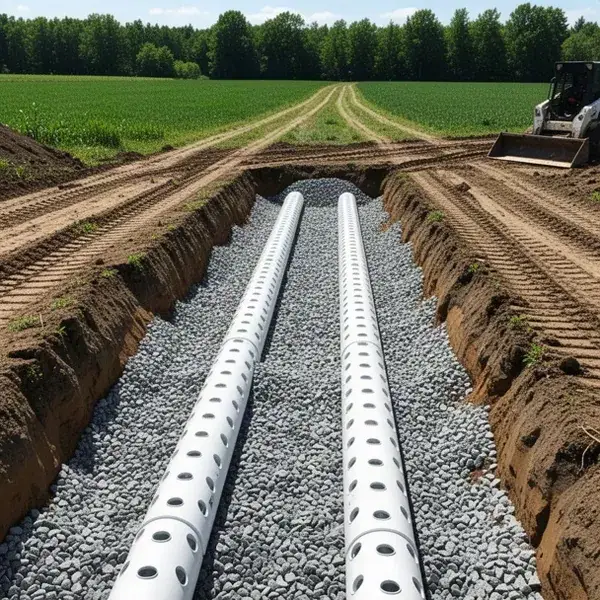
A conventional bed is a series of absorption trenches dug into native soil, each with 19 to 50 mm clear stone and a perforated distribution pipe. It suits soils with a percolation time (T-time) between 1 and 50 minutes per centimetre and at least 900 mm of unsaturated soil below the trenches.
Trench length comes from the Code formula: daily design flow multiplied by T-time, divided by 200. For example, a three-bedroom home with a T-time of 15 needs roughly 120 m of trench, which is why conventional beds need room. They are usually the least expensive option.
Raised and Partially Raised Beds
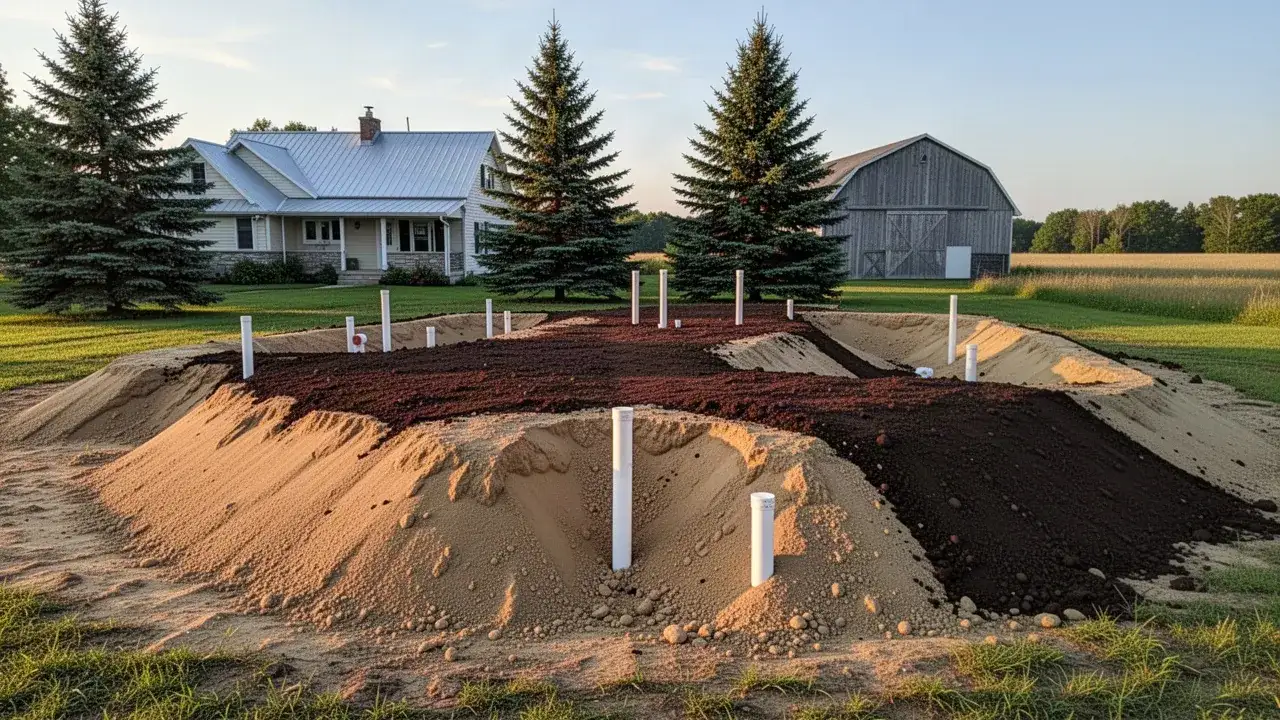
When the native soil is too tight, too shallow over bedrock, or the water table is too high, the bed is built up on imported leaching bed fill. A partially raised bed uses some native soil depth; a fully raised bed sits on a mound of imported sand.
Raised beds need a mantle of sand that extends well beyond the stone, up to 15 m in the direction effluent flows, plus more fill and trucking. Expect a higher price than a conventional bed.
Filter Beds
A filter bed replaces the native soil under the distribution pipes with a deep layer of specified filter sand, at least 750 mm thick. Because the sand treats effluent more efficiently, the bed has a much smaller footprint than a conventional system.
Filter beds suit smaller lots and tight soils, but the imported sand must meet a strict gradation, so material quality control on site is important.
Tertiary Treatment Units
Tertiary treatment units such as the Waterloo Biofilter, Ecoflo and Bionest treat effluent to a much higher standard before it reaches the soil. They are certified to the CAN/BNQ 3680-600 standard and allow a smaller, shallower dispersal bed.
They are the answer for tight lots, high groundwater and sensitive areas near wells or water. They cost more to install, need power and require an ongoing maintenance agreement.
Septic Permits and Ontario Building Code Part 8
Every new, replacement or altered septic system in Ontario needs a permit under Part 8 of the Ontario Building Code (O. Reg. 163/24), and it must be inspected before it is covered. Systems over 10,000 L per day are regulated by the Ministry of the Environment, Conservation and Parks instead.
The design is prepared by a qualified designer who holds a BCIN in the on-site sewage systems category, or by a professional engineer. Ontario also requires anyone in the business of installing sewage systems to be qualified and registered with the Ministry of Municipal Affairs and Housing, so always ask your installer for their BCIN.
Permits are issued by the local authority, usually the township building department in rural areas. The Township of Puslinch building and septic permit page is a good example of what applicants need to submit.
Percolation Time (T-Time): T-time is how many minutes water takes to drop 1 cm in the soil. Sand may be under 10 minutes; heavy clay may be over 50, which rules out a conventional bed.
It is determined from test pits and soil samples, often checked by lab grain-size analysis, and it drives the size and type of the whole system.
Setbacks from Wells and Buildings: Part 8 sets minimum distances to protect water supplies and foundations. A leaching bed generally needs 15 m from a drilled well with a watertight casing at least 6 m deep, 30 m from any other well, 15 m from a lake, river or stream, 5 m from a building and 3 m from a property line.
The tank has its own, shorter setbacks. On small rural lots these distances often decide the system type before soil does.
How a Septic Installation Works
Once the permit is issued, most residential septic installations take 3 to 7 working days on site. The design and permit stages beforehand usually take several weeks, depending on the designer and the municipality.
- 01
Site Evaluation and Test Pits
We dig test pits where the designer wants them, typically 1.5 to 2 m deep, so they can log soil layers, take samples and look for signs of seasonal high groundwater such as mottling. Bedrock depth is noted too.
We request Ontario One Call locates first and keep pits away from the existing system and well.
- 02
Design and Permit Approval
The designer uses the test pit results, the home's daily design flow and the setbacks to choose the system type and draw the layout. The permit application goes to the local building department with the site plan and design.
We review the drawings before the dig so material quantities, access for trucks and the location of spoil and stockpiles are planned.
- 03
Tank Placement and Bed Excavation
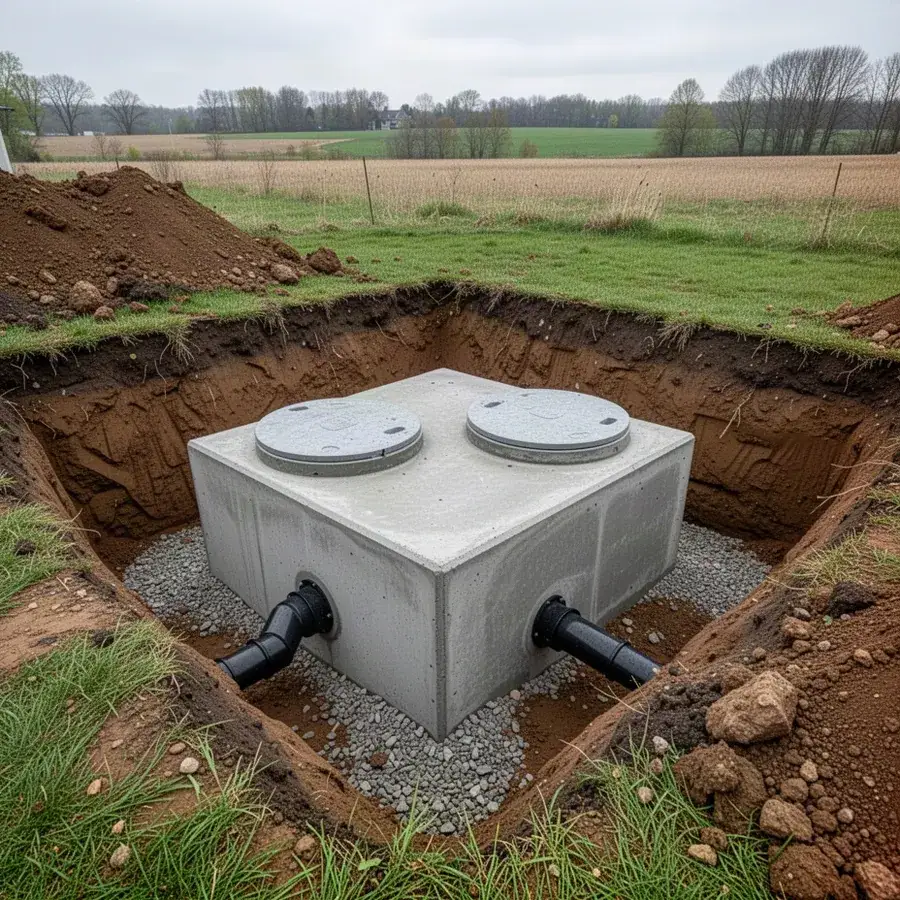
The tank goes on a level, compacted base at the design elevation, with inlet and outlet pipes set so the house sewer and the bed both have proper fall. Plastic tanks in high groundwater are anchored so they cannot float.
We then excavate or build up the bed, place clear stone or filter sand to the specified depths, and lay the distribution pipes level at the required spacing. Pumped systems get a pump chamber and float controls wired by an electrician.
- 04
Inspection, Cover and Final Grade
Nothing gets covered until the building inspector signs off on the tank, piping, stone and elevations. After approval we place geotextile over the stone, then backfill and topsoil.
Final grading sheds surface water away from the bed, and the area is seeded with grass. If the yard needs broader reshaping, our grading and levelling service can finish the rest of the property at the same time.
Septic System Cost in Ontario
A new or replacement septic system in Ontario typically costs between $15,000 and $50,000. Conventional beds on good soil sit at the low end, while raised beds, filter beds and tertiary units cost more.
General ranges we see in the region:
- Septic tank replacement only: roughly $5,000 to $12,000, depending on tank size and access.
- Conventional leaching bed system: roughly $15,000 to $30,000.
- Raised or filter bed system: roughly $25,000 to $45,000, driven by imported fill and trucking.
- Tertiary treatment system: roughly $30,000 to $50,000 or more, plus ongoing service costs.
Other cost drivers are soil and T-time, groundwater depth, distance from the house, access for trucks, tree removal, the design fee and permit fees. As one local example, the Township of Puslinch's 2025 fee schedule lists $753 for a new system permit and $564 to alter or repair one. Your firm price comes from a free site visit and the approved design.
Caring for Your New Septic System
A well-built system with regular care lasts decades. Most homes should have the tank pumped every 3 to 5 years and the effluent filter cleaned whenever it starts to clog.
- Watch what goes down the drain: no wipes, grease, paint, solvents, medications or large amounts of harsh cleaners.
- Spread out water use: run laundry over the week instead of in one day so the bed is not flooded.
- Keep weight off the bed: no vehicles, pools, sheds or livestock over the tank or leaching area.
- Plant only grass on the bed: tree and shrub roots, especially willows and poplars, clog distribution pipes.
- Direct clean water elsewhere: downspouts and sump pump discharge must never go into the septic system or onto the bed.
Keep a sketch of where the tank lids and bed sit, and a record of pump-outs. It saves time on every service visit and helps when you sell.
Where We Provide Septic System Excavation
We provide septic system excavation from our Cambridge yard to homes, farms and businesses within about a 30-minute drive of Cambridge. Choose your community for local permit, soil and neighbourhood details.
Septic System FAQs
How much does a new septic system cost in Ontario?
Most new septic systems in Ontario cost between $15,000 and $50,000. A conventional bed on good soil is the most affordable, while raised beds and tertiary treatment units sit at the high end.
Design and permit fees are additional, and the exact price depends on your soil and site.
How long does a septic installation take?
Most residential installations take 3 to 7 working days once the permit is issued. Weather, inspection scheduling and the amount of imported fill are the main variables.
The design and permit stage before construction usually adds several weeks.
How long does a leaching bed last?
A properly designed and maintained leaching bed usually lasts 20 to 30 years, and sometimes longer. Skipped pump-outs, excess water use, vehicles on the bed and roots in the pipes shorten that considerably.
Concrete tanks often outlast the bed, which is why many replacements keep the existing tank.
Can a septic system be installed in winter?
Yes, with limits. Frozen ground slows excavation, fill material must not be frozen when placed, and snow cover makes final grading difficult.
Winter installs are usually done when a system has failed and cannot wait, with final grading and seeding completed in spring.
Do I need a permit to replace a septic tank?
Yes. In Ontario, replacing a septic tank is an alteration of a sewage system and needs a permit under Part 8 of the Building Code.
The permit makes sure the new tank is correctly sized, located and inspected, which protects your well, your neighbours and your home's resale value.
Book a Septic Site Assessment
If your bed is wet, your drains are slow, or a purchase depends on a septic report, call us for a site assessment and a written quote. We serve rural properties in Woolwich, Puslinch and Wilmot, plus the rural edges of Cambridge, Kitchener and Guelph.
Our phones are answered into the evening seven days a week, which helps when you are juggling closing dates or a failing system.
- Fennex Cambridge Excavation Pros
- 725 Briardean Rd, Cambridge, ON N3H 4R6
- +1 226-894-8631
- info@fennexexcavation.ca
- Mon to Sat 7:00am to 9:30pm
Sun 9:00am to 9:00pm