New Hamburg and Wilmot Excavators
Excavation Services in Wilmot Township and New Hamburg
Fennex Cambridge Excavation Pros handles excavation across Wilmot Township, from riverside lots in New Hamburg and hillside homes in Baden to farms around Petersburg, St. Agatha and New Dundee. We dig foundations and walkouts, fix wet lots, excavate septic systems and take down old farm buildings for homeowners, farmers and builders.
Wilmot gives us two very different kinds of ground to work with. The Nith River has flooded parts of New Hamburg repeatedly, most recently in 2018 and 2020, while the Baden Hills rise in steep, sandy knolls just a few kilometres east, so a good plan starts with knowing which side of the township you are on.
Our crews bring more than 40 years of excavation experience, and we are licensed, insured, WSIB covered and COR certified through IHSA. Wilmot is about 25 to 30 minutes from our Cambridge yard, well inside our regular service area.
Communities We Serve in Wilmot
We serve all of Wilmot, a rural township of about 21,000 people on the western edge of Waterloo Region. It was settled from the 1820s by Mennonite, Amish and other European farm families, and many of its communities still reflect that mix of village and farm.
New Hamburg
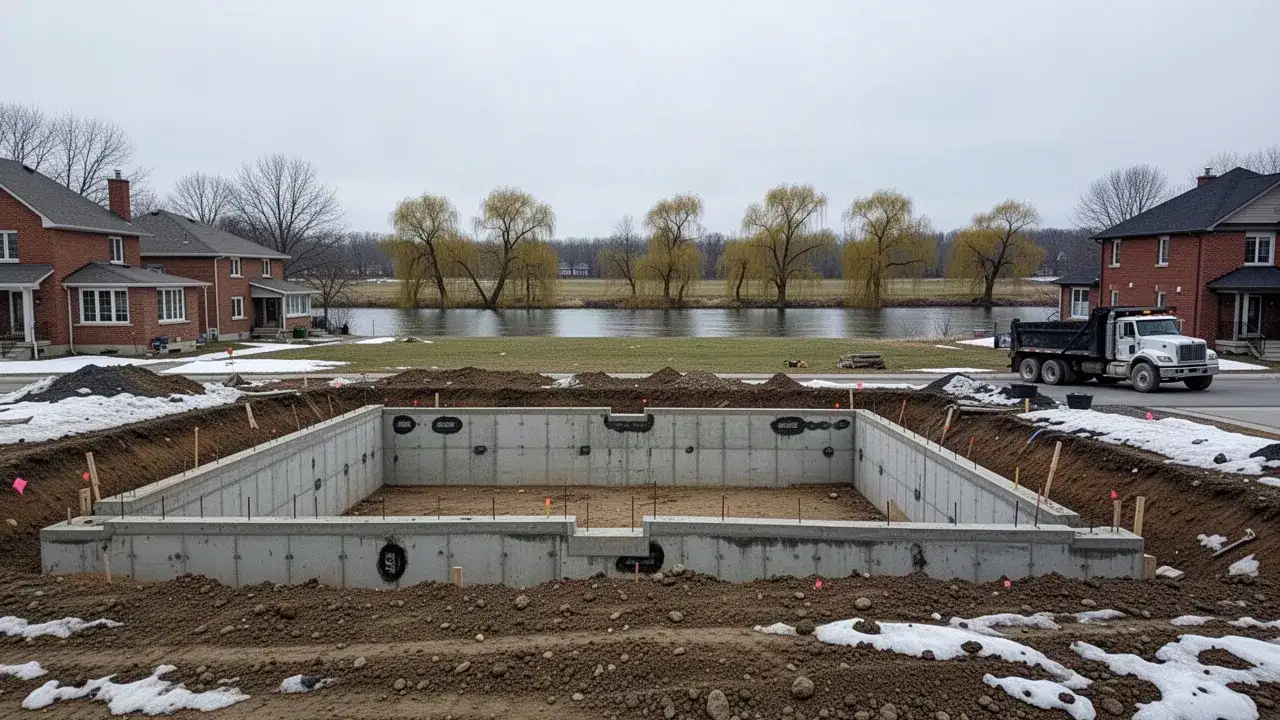
New Hamburg is Wilmot's largest community, built along the Nith River with an older downtown and newer subdivisions on higher ground. Older homes near the river deal with high groundwater and flood history, while new streets need foundations, servicing and lot grading.
We plan every New Hamburg dig around the floodplain map first, because it decides what can be built and how.
Baden
Baden sits below the Baden Hills and is home to Castle Kilbride, the 1877 mansion of flax and linseed oil mill owner James Livingston, now a National Historic Site. Newer homes have climbed onto the slopes around the village, which brings walkouts, retaining grades and plenty of surface water.
The hills are sand and gravel, so cuts drain well but need careful sloping and erosion control.
Petersburg and St. Agatha
Petersburg and St. Agatha are rural hamlets on the township's northeast side, surrounded by farms and country estate lots. Homes here rely on private septic systems and wells.
Typical jobs are septic replacements, long driveways, shop pads and removing old outbuildings.
New Dundee and Mannheim
New Dundee is a village on Wilmot's southern edge, and Mannheim sits on the eastern side next to Kitchener. Both mix older village homes with rural properties and newer custom builds.
Being closest to Cambridge, they are often the quickest Wilmot sites for us to reach.
Building in the Nith River Floodplain
Much of downtown New Hamburg lies in the Nith River floodplain, so building or digging there usually needs a Grand River Conservation Authority permit. The town has flooded in 1948, 1954, 1975, 2008, February 2018 and January 2020, and the 2018 flood closed 16 roads across Wilmot.
After those floods, the GRCA completed the New Hamburg Flood Mitigation Study, and updated regulated area mapping for the Nith was approved in June 2021. That mapping now decides which lots need a permit and what flood elevation new work has to respect.
For foundations near the river, that often means raised floor elevations, flood-resistant materials below the regulatory flood line and backwater protection on sewer connections. We build the dig to the approved elevations, keep spoil out of the floodplain and control sediment so it does not reach the river.
- Check the lot on the GRCA regulated area mapping before design starts.
- Get the regulatory flood elevation and set the lowest floor and openings above it.
- Use free-draining backfill and a reliable sump outlet where groundwater sits high.
- Install a backwater valve on the sanitary connection to stop sewer backup during floods.
- Stage soil and materials outside the flood fringe in case the river rises mid-job.
Sloped Lots in the Baden Hills
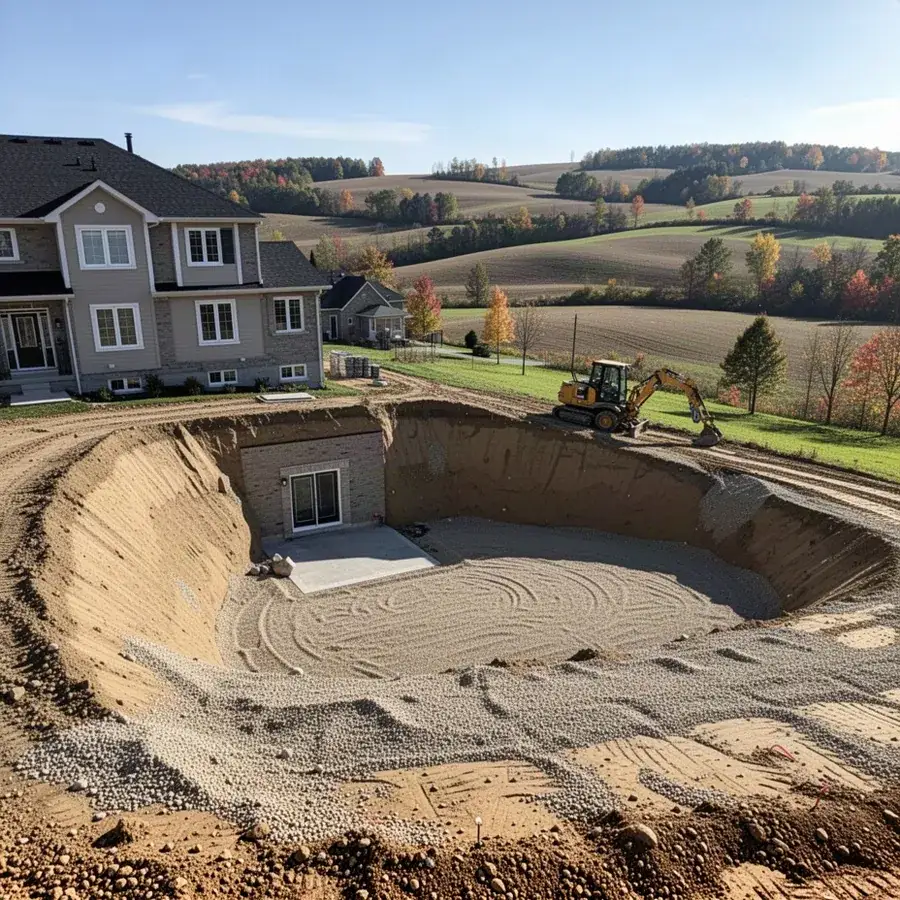
Sloped Baden lots are ideal for walkout basements, as long as the cut, the drainage and the final grades are planned together. The Baden Hills are four glacial kames, mounds of sand and gravel left by melting ice, and the highest carries the Baden Tower broadcast antenna.
Sand and gravel cuts stand up poorly once they dry out, so we slope or bench excavation walls and get them backfilled quickly. Our walkout basement excavation in Baden includes the cut, footings at frost depth, drainage at the walkout door and backfill with free-draining material.
Hillside lots also send a lot of runoff toward the house. With grading and levelling on sloped Wilmot lots, we shape swales and terraces that carry water around the building and slow it down before it reaches the neighbour below.
- Set the walkout floor elevation from the final grade plan, not the existing slope.
- Bench or slope the uphill cut instead of leaving a vertical face in dry sand.
- Place erosion control blanket or seed on finished slopes before the next rain.
- Direct downspouts and swales away from the walkout door and patio.
Septic Systems on Rural Wilmot Properties
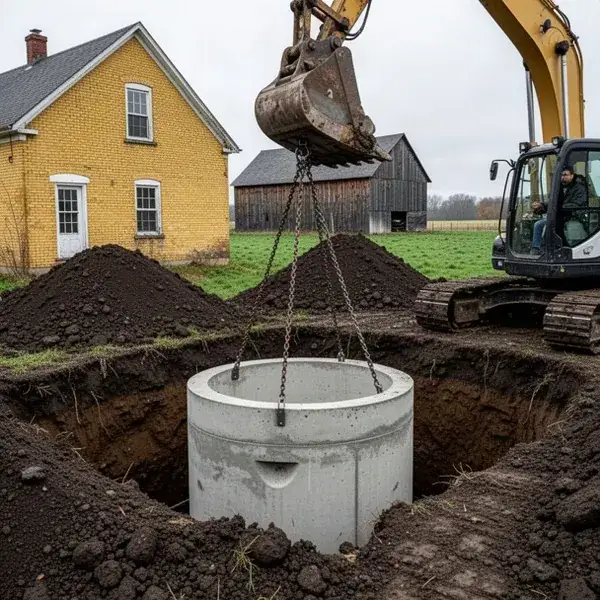
Rural Wilmot homes outside New Hamburg, Baden and New Dundee typically use a private septic system and well. Installing or altering a system needs a building permit from the Township of Wilmot, and new or replacement systems also carry a final inspection deposit that is refunded once the system passes.
Final septic inspections generally cannot happen during winter conditions, roughly December 1 to April 30, so summer and early fall are the best time to book. The Township also requires a septic audit by a licensed installer when you add plumbing fixtures, bedrooms or more than 15% floor area.
Wilmot lies inside the Grand River Source Protection Area, and some systems in vulnerable areas must be inspected every five years. Our septic system excavation for Wilmot properties follows the permitted design and leaves the system open for the inspector.
Township of Wilmot Permits and Approvals
Building, demolition and septic permits in Wilmot are issued by the Township's Building Division. The Township of Wilmot building permits page lists the forms, deposits and inspection rules.
A demolition permit is needed to remove all or part of any building. A professional engineer must review demolitions of buildings over 600 m² (6,460 sq ft), over three storeys or using special methods.
Applications in vulnerable source water protection areas are screened for drinking water threats, and projects near rivers, streams, wetlands, slopes or ponds may need a separate GRCA permit. The GRCA planning and permits page explains those rules under Ontario Regulation 41/24.
- New homes, additions and garages: Township building permit.
- Septic installs and alterations: Township building permit plus final inspection deposit.
- Demolition: Township demolition permit, with utilities disconnected first.
- Work in the Nith floodplain or near slopes and wetlands: GRCA permit.
- Any digging: Ontario One Call locates before the first bucket.
Popular Excavation Services in Wilmot
These are the projects Wilmot owners call us for most, each shaped by the river, the hills or the farm setting.
Foundations for New Homes
New subdivisions in New Hamburg and Baden, plus custom homes on rural lots, need foundation digs set accurately from the surveyor's stakes. Our residential excavation work covers the dig, footing base, weeping tile trench and backfill once the walls are waterproofed.
On lots near the Nith, we confirm the approved floor elevation before digging so the basement is not set too low.
Drainage for Wet Lots Near the Nith River
Low lots near the river often stay wet long after a storm or spring thaw. Our drainage excavation in New Hamburg includes French drains with perforated pipe and clear stone, new weeping tile and regraded swales that move water to a proper outlet.
Where the lot is inside the regulated area, we check whether the drainage work itself needs a GRCA permit first.
Septic Systems for Rural Wilmot Homes
Farmhouses and country homes around Petersburg, St. Agatha and the township's back roads often have older systems near the end of their life. We excavate new tanks and beds, keep clear of the well and restore the yard after inspection.
Booking before late fall leaves time for the Township's final inspection before winter.
Demolishing Old Farm Buildings and Houses
Wilmot's farm country has plenty of aging barns, drive sheds, silos and farmhouses. We handle demolition in Wilmot of old farm buildings and houses, including breaking out foundations, filling basements and grading the site.
We sort concrete, steel and wood where possible and remove debris to licensed facilities.
Travel From Cambridge to Wilmot
Most Wilmot sites are about 25 to 30 minutes from our Cambridge yard. New Hamburg and Baden are reached by Highway 7/8 west from Kitchener, the main corridor through the township.
Mannheim and New Dundee on the township's east and south sides are usually closer, while farms west of New Hamburg toward the Perth County line take the longest. We confirm travel for every address when we book the site visit.
Our Wilmot Service Area
Fennex crews reach most Wilmot job sites in about 25 to 30 minutes from our yard at 725 Briardean Rd in Cambridge, and we are open seven days a week.
Homeowners and builders here rely on our residential excavation services, while developers, property managers and contractors book our commercial excavation services.
See every community we cover on our excavation service areas page.
Wilmot Excavation FAQs
Is my New Hamburg property in the Nith River floodplain?
The quickest way to check is the GRCA's Map Your Property tool, which shows regulated areas updated for the Nith in 2021. Much of downtown New Hamburg is inside the floodplain.
If your lot is regulated, building, grading or filling needs a GRCA permit, and we plan the excavation to the approved elevations.
Do you work in Baden and Petersburg?
Yes. We work throughout Baden, Petersburg and the rest of Wilmot, including St. Agatha, New Dundee and Mannheim.
In Baden we do a lot of hillside walkouts and grading, while Petersburg jobs tend to be rural septic, driveway and demolition work.
Who handles septic permits in Wilmot?
The Township of Wilmot Building Division issues septic permits as building permits. New or replacement systems require a final inspection deposit, which is refunded after the final inspection.
Adding bedrooms, fixtures or more than 15% floor area also triggers a septic audit by a licensed installer.
Can you dig a walkout on a sloped Baden lot?
Yes, sloped Baden lots are often well suited to walkouts. We excavate the cut, set footings below frost depth, add drainage at the door and grade the slope so water moves around the house.
In the sandy soils of the Baden Hills, we also plan erosion control so the new slope stays put.
Book Your Wilmot Project
From a new foundation near the Nith in New Hamburg to a walkout on a Baden hillside or a septic replacement near St. Agatha, we will check the floodplain, permits and soil before we quote.
Call or send us your Wilmot address and project details, and we will book a free site visit.
- Fennex Cambridge Excavation Pros
- 725 Briardean Rd, Cambridge, ON N3H 4R6
- +1 226-894-8631
- info@fennexexcavation.ca
- Mon to Sat 7:00am to 9:30pm
Sun 9:00am to 9:00pm