Elmira and Woolwich Excavators
Excavation Services in Elmira and Woolwich Township
Fennex Cambridge Excavation Pros digs septic systems, farm lanes, culverts, building pads and new home foundations across Woolwich Township, from Elmira and St. Jacobs to Breslau, Conestogo and the farm roads in between. We work for rural homeowners, farm families and builders in the township's growing villages.
Woolwich is a working countryside. Many homes sit on private septic systems and wells, field drainage matters to every neighbour downstream, and the Grand and Conestogo rivers shape where you can build, so rural excavation here is about setbacks, permits and water as much as digging.
Our crews bring more than 40 years of excavation experience, and we are licensed, insured, WSIB covered and COR certified through IHSA. Breslau is a short run from our Cambridge yard, and Elmira and St. Jacobs are about half an hour away.
Villages and Rural Areas We Serve in Woolwich
We cover all of Woolwich Township, a rural municipality of about 27,000 people in the northeast corner of Waterloo Region. Its ten communities range from a small industrial town to river hamlets, and the work changes with each one.
Elmira
Elmira is the township's largest community, with older brick homes near the core, newer subdivisions on the edges and an industrial base along the Canagagigue Creek. We dig foundations for infill and new builds, replace sewer and water laterals and clear lots for additions and garages.
The town is on municipal sewer and water, but properties just outside it often are not. A few kilometres can change a job from a lateral connection to a full septic system.
St. Jacobs
St. Jacobs sits on the Conestogo River, with a compact village core and working farms all around it. Waterloo Region's Old Order Mennonite community is concentrated around St. Jacobs and Elmira, and horse-drawn buggies share many of the roads we haul on.
That means trucks and floats move at farm pace on the side roads, and we plan haul routes and timing with that in mind. Village lots near the river can also fall inside GRCA regulated areas.
Breslau
Breslau has grown quickly over the past 15 years, with new subdivisions, schools and parks beside the Region of Waterloo International Airport. Builders here need foundation digs, servicing trenches and backyard work once homes are occupied.
It is also the closest Woolwich community to our yard, which keeps mobilization simple for short jobs like pools, walkouts and drainage fixes.
Conestogo, Maryhill and West Montrose
Conestogo sits where the Conestogo River meets the Grand, and West Montrose is home to the 1881 covered bridge, Ontario's last remaining one, across the Grand River. Maryhill, on the township's east side, is mostly rural estate lots and farms.
Riverside and valley-edge properties in these hamlets usually need a GRCA permit for grading or new structures. Rural lots here also rely on septic systems and wells.
Septic Systems and Private Wells
Most rural Woolwich homes run on a private septic system and a private well, so the two have to be planned together. The Ontario Building Code sets minimum distances between a leaching bed and a well, typically 15 m (50 ft) from a drilled well with a watertight casing at least 6 m deep, and 30 m (100 ft) from other wells such as dug wells.
The Township of Woolwich building department issues septic permits. An application needs the permit form, a designer schedule, an installer schedule, design calculations under Part 8 of the Ontario Building Code and a site plan showing the bed location with a soil classification.
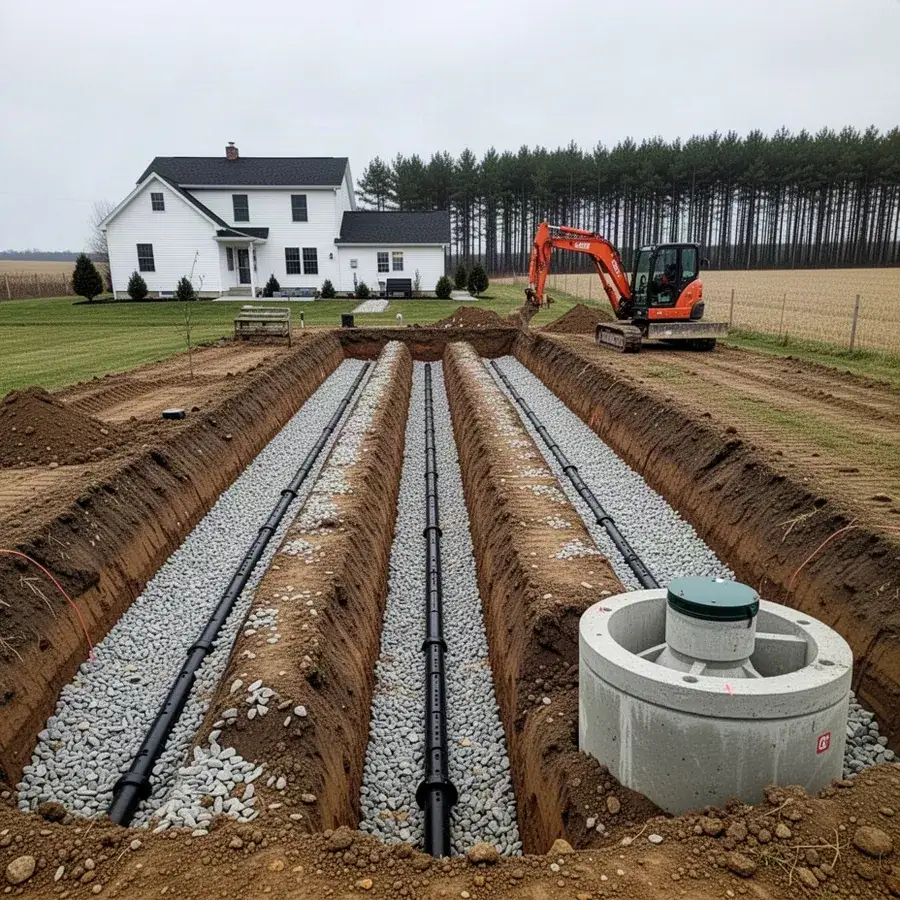
Adding a bedroom or expanding living space can trigger a septic review through the Township's Septic Evaluation Form. Some properties in source water protection areas also need a Section 59 notice from the Region of Waterloo before a permit can be issued. Our septic system excavation in Woolwich follows the approved design and is left open for inspection before backfill.
Farm Excavation: Lanes, Building Pads and Drainage
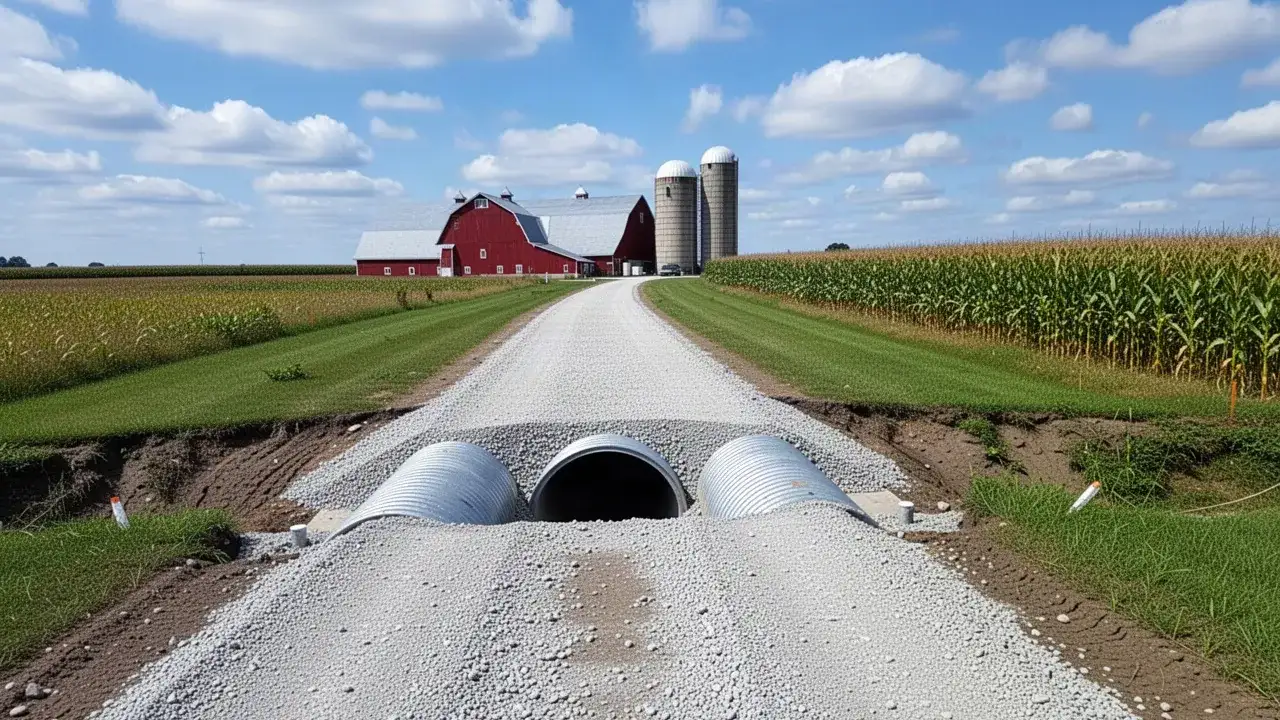
Woolwich farms keep us busy with lanes, building pads and surface drainage. We build farm lanes on a compacted granular base that carries loaded wagons and feed trucks through spring thaw, and we cut and fill level pads for new barns, drive sheds and shops.
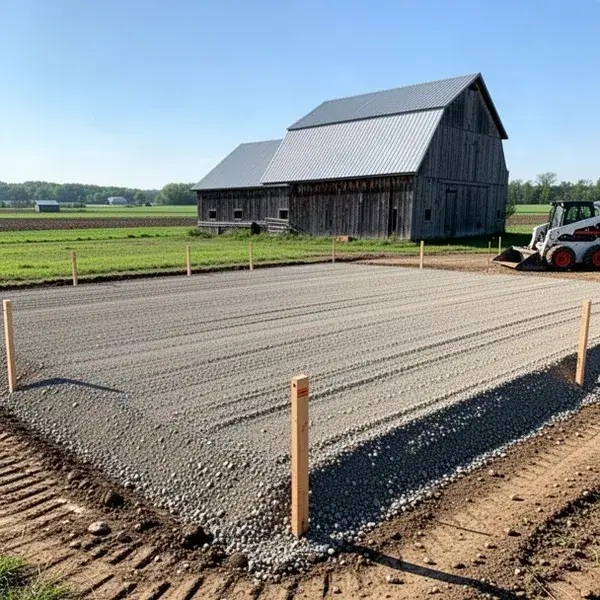
Pads are built in compacted lifts of Granular B with a Granular A top, so the floor or slab sits on a stable base. We grade around them to shed water away from the building and toward an existing ditch or swale.
Surface drainage work includes cleaning and reshaping ditches, building grassed swales and setting culverts where lanes cross a watercourse. We keep that work separate from subsurface field tile, which in Ontario is installed by licensed tile drainage contractors.
Working Near the Grand and Conestogo Rivers
If your Woolwich property is near the Grand River, the Conestogo River or one of their creeks, you may need a GRCA permit before you dig, fill or build. Under Ontario Regulation 41/24, the Grand River Conservation Authority regulates development, site grading and the placing or removal of material in floodplains, valleys, wetlands and near watercourses.
The GRCA planning and permits page includes the Map Your Property tool, which shows whether a lot falls in a regulated area. The GRCA must confirm a complete application within 21 days and aims to decide within 90, so riverside work needs to be booked with that lead time.
On regulated lots we install silt fence before stripping, keep stockpiles out of the floodplain and restore disturbed banks quickly. That protects both the river and your permit.
Environmental Due Diligence on Former Industrial Land
Some Elmira sites call for soil testing before excavation, because the town has a documented history of groundwater contamination. In 1989, NDMA and other chemicals linked to the former Uniroyal Chemical plant were found in the aquifers under Elmira, and the town has been supplied by a pipeline from Waterloo ever since.
The plant, now operated by Lanxess, continues a pump-and-treat cleanup under a provincial control order, and contamination has also been studied in the Canagagigue Creek. Most Elmira lots are not affected, but redevelopment of older commercial or industrial land should start with a Phase One environmental site assessment.
When testing finds impacted soil, our environmental excavation and remediation in Elmira follows the consultant's plan. We segregate soil by quality and move excess soil under O. Reg. 406/19 with the records to prove where it went.
Popular Excavation Services in Woolwich
These are the jobs Woolwich clients ask us for most, each shaped by the township's farms, villages and rules.
Septic Installation and Replacement
Older rural Woolwich systems often reach the end of their life when a bed starts ponding or a farmhouse is renovated. We excavate the new tank and bed to the permitted design, keep clear of the well and set grades so effluent flows by gravity where the site allows.
On replacements, we plan machine access so the old bed, the well and the laneway are not driven over by loaded trucks.
Clearing Woodlots and Building Lots
We provide land clearing in Woolwich for building lots, fence lines and overgrown corners of farm properties. That includes tree and brush removal, stump grubbing and topsoil stripping, with the topsoil stockpiled for later grading.
Before clearing, we check whether the Region of Waterloo's woodland conservation rules apply to the woodlot. Larger stands may need approval before any trees come down.
Driveways and Rural Entrance Culverts
Long rural driveways need a proper base to survive Woolwich winters and spring thaw. Our driveway excavation and preparation in Woolwich strips topsoil, places filter fabric on soft ground and builds up compacted Granular B and Granular A.
New entrances onto Township roads need a Township of Woolwich entrance permit, and any culvert noted on that permit is the owner's responsibility to supply and install to Township specification. Entrances on regional roads need a Region of Waterloo access permit instead.
Foundation Excavation in Breslau and Elmira
We carry out foundation excavation in Breslau and Elmira for custom homes, infill builds and additions. The dig is set from the surveyor's stakes, with the footing base trimmed level and kept dry for the inspector.
Builders in new Breslau subdivisions also call us for servicing trenches, garage pads and final lot grading.
Travel Time to Woolwich
Travel time from our Cambridge yard ranges from about 20 minutes to Breslau to about 30 to 35 minutes to Elmira, St. Jacobs and West Montrose. Elmira and St. Jacobs are a straight run north through Kitchener and Waterloo on the Conestoga Parkway and Regional Road 85.
Because the township is rural, the drive is predictable and rarely slowed by city traffic. We plan float moves to arrive early and keep machines on site until the job is finished.
Our Woolwich Service Area
Fennex crews reach most Woolwich job sites in about 20 to 35 minutes from our yard at 725 Briardean Rd in Cambridge, and we are open seven days a week.
Homeowners and builders here rely on our residential excavation services, while developers, property managers and contractors book our commercial excavation services.
See every community we cover on our excavation service areas page.
Woolwich Excavation FAQs
Who issues septic permits in Woolwich Township?
The Township of Woolwich building department issues permits for new septic systems, replacements and major repairs. The application includes designer and installer schedules, Part 8 design calculations and a site plan with soil information.
Some properties also need a Section 59 source protection notice from the Region of Waterloo first. You can find the forms on the Township of Woolwich building and construction page.
Do you work on farms in Woolwich?
Yes. We build farm lanes, barn and shop pads, culvert crossings, surface ditches and swales, and we clear fence lines and woodlot edges.
We also excavate for septic systems on farm homes and remove old foundations and outbuildings when a yard is being reorganized.
Do you travel north of Elmira?
Yes, as long as the site is within about a 30 minute drive of our Cambridge yard. Farm roads just north of Elmira, toward Floradale, are usually close to that limit.
For sites farther out, call us with the address and we will tell you honestly whether we can serve it well.
Can you install a culvert for a new rural entrance?
Yes. Once the Township of Woolwich approves your entrance permit, we install the culvert and build the entrance to the size and specification the permit sets out.
The Township charges a permit fee, an inspection fee and a refundable damage deposit based on frontage. Details are on the Township of Woolwich driveways, entrances and culverts page.
Book Your Woolwich Project
From a septic bed behind a farmhouse near St. Jacobs to a new foundation in Breslau, we will walk your site, sort out the permits that apply and give you a clear written quote.
Call or send us your Woolwich address and a few details, and we will book a free site visit.
- Fennex Cambridge Excavation Pros
- 725 Briardean Rd, Cambridge, ON N3H 4R6
- +1 226-894-8631
- info@fennexexcavation.ca
- Mon to Sat 7:00am to 9:30pm
Sun 9:00am to 9:00pm