Waterloo Excavation Contractors
Excavation Contractors in Waterloo, Ontario
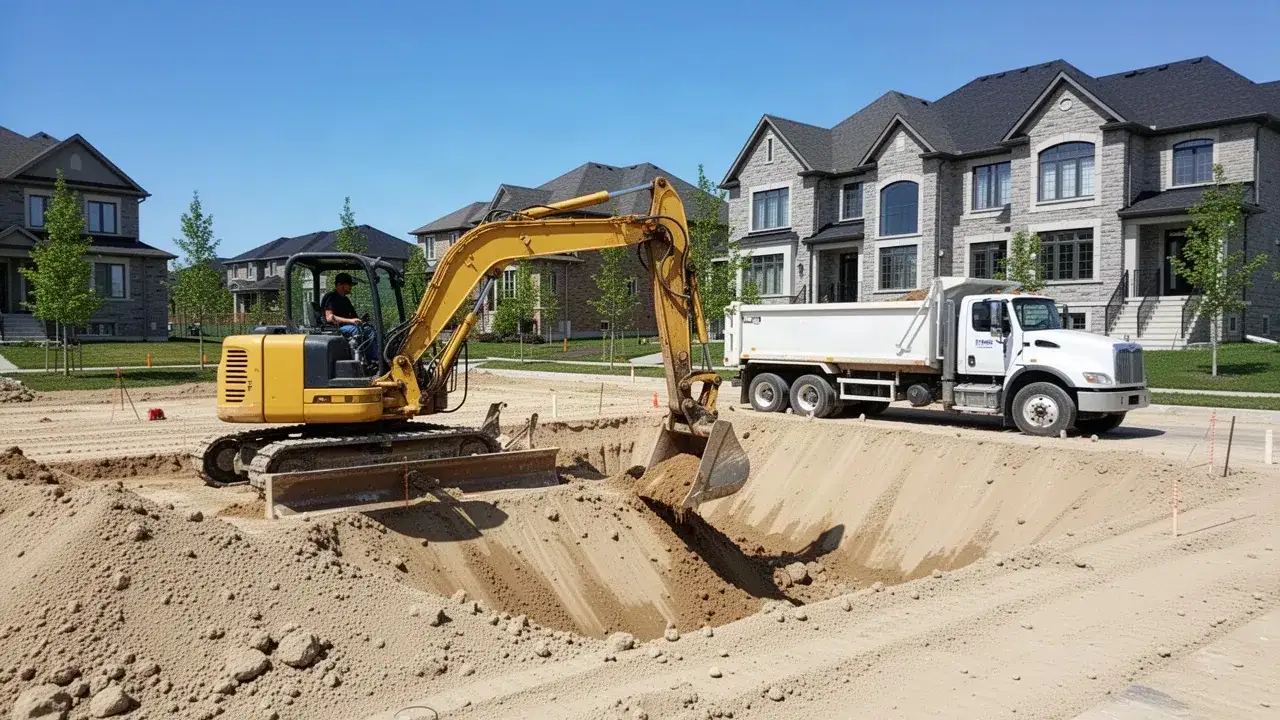
Fennex Cambridge Excavation Pros digs throughout Waterloo, from Uptown and Northdale infill to custom homes in the west end. What sets Waterloo apart is what lies under it: the sand and gravel of the Waterloo Moraine, which caves easily in a trench and also feeds the aquifer that most of the Region drinks from.
That combination changes how a Waterloo dig is planned. Excavation walls need more sloping or support, fuel and fill are handled with wellhead protection rules in mind, and lots near Laurel Creek can need a Grand River Conservation Authority (GRCA) permit.
We have more than 40 years of excavation experience and carry full licensing, insurance, WSIB coverage and an IHSA Certificate of Recognition (COR). We work for homeowners through our residential excavation services and for builders and landlords on commercial excavation projects across the city.
Digging on the Waterloo Moraine
Most of Waterloo sits on the Waterloo Moraine, a glacial deposit of about 400 km² made mostly of sand and gravel. It is 30 m to more than 100 m thick and also underlies Kitchener and the townships of Wilmot, Wellesley and North Dumfries.
The moraine works like a giant sponge. Rain soaks through its sand into aquifers that supply the municipal wells, which is why the Region relies on groundwater for roughly three quarters of its drinking water.
For an excavator, moraine sand means walls that run and cave as soon as they dry out or get wet. Any dig deeper than 1.2 m (4 ft) needs sloping, benching or a trench box under O. Reg. 213/91, so Waterloo foundation holes are usually wider at the top than the same hole in clay.
Wellhead Protection Areas and Source Water Rules
Large parts of Waterloo fall inside wellhead protection areas around the Region's municipal wells, and some activities there are restricted or prohibited. Each well is surrounded by four zones: 100 m, 2 years, 5 years and 25 years, based on how long water takes to reach the well.
If your property is in a vulnerable area, your building permit application needs a signed Section 59 Notice confirming the work complies with the Source Protection Plan. Some applications must first get a risk management plan from the Region's Risk Management Official.
The policies cover activities such as fuel and chemical handling, residential heating oil storage, septic systems and winter salt on parking lots. Check your address with the Region's TAPS map on the Region of Waterloo source water protection page, and we plan machine refuelling, spill kits and imported fill around what it shows.
Neighbourhoods We Work In
Waterloo ranges from century homes near Uptown to houses finished in the last few years on the west edge. These are the areas where we work most and what we usually find.
Uptown and Northdale
Uptown has some of Waterloo's oldest houses, many with low basements and older foundations. Northdale, between the University of Waterloo and Wilfrid Laurier University, has changed from post-war single detached homes into a district of mid-rise student buildings.
Work here means basement lowering, teardowns and new service connections on small lots next to busy streets. Trucks, traffic control and same-day haul-off are part of every plan.
Beechwood and Columbia Forest
Beechwood takes its name from Beechwood hill, a kame of glacial sand and gravel, and its larger lots attract pools, additions and big landscaping projects. Columbia Forest, further west, has newer homes with full backyards.
Pool digs, pool removals and yard drainage are our most common calls in these neighbourhoods.
Laurelwood, Clair Hills and Vista Hills
Waterloo's west end holds much of its newest housing, built on moraine soils near the Laurel Creek Conservation Area and Clair Pond. Streets here range from 1990s family homes to lots that are still being built on.
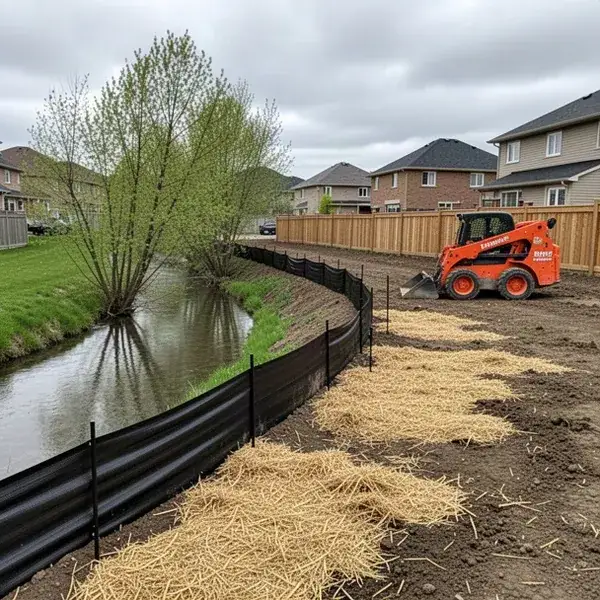
Here we dig for custom homes, walkouts, deck footings and finished grading. Sandy subsoil drains well but erodes quickly, so silt fence and quick stabilisation matter on these sloping lots.
Lakeshore and Eastbridge
Lakeshore in the north end and Eastbridge on the east side toward the Grand River are established family neighbourhoods. Many homes there are reaching the age where weeping tile, sewer and water services and driveways need replacing.
These jobs are mostly about getting in and out of a finished yard cleanly, with ground mats, careful sod removal and tidy restoration.
Infill and Basement Conversions Near the Universities
Demand for rental units near the University of Waterloo and Wilfrid Laurier keeps basement conversions and teardown rebuilds busy in Waterloo. The City's zoning now allows up to four dwelling units on many residential lots, meaning up to three additional residential units (ARUs) beside the main house.
Every ARU needs a building permit, and the site plan must show parking, driveway dimensions and the entrances to both units. Older homes near campus often need deeper basements and a new entrance to make a legal unit work.
Our basement excavation services in Waterloo cover the dig-out, the bench footing or underpinning work and the new drainage under the slab. In moraine sand, we keep each open section short so the soil under the existing footings stays put.
Creeks, Lakes and Regulated Areas
Land along Laurel Creek and its ponds and lakes is regulated by the GRCA, so grading, filling or building there needs a GRCA permit under O. Reg. 41/24. Most of the Laurel Creek watershed lies inside the City of Waterloo before the creek joins the Grand River.
The watershed includes Laurel Creek Reservoir, which the GRCA built in 1966 to hold back flood water, plus Columbia Lake, Laurel Lakes, Clair Pond and Silver Lake. Silver Lake in Waterloo Park began as a sawmill pond in 1808.
Check your lot with the GRCA planning and permit mapping before you design a pool, addition or regrade near water.
The City adds its own layer. The Waterloo site alteration by-law (By-law 2010-066) requires a permit to place fill, remove topsoil or change grade, with exemptions for small jobs such as under 20 m³ a year or excavations under 9 m² and 0.5 m deep, but the small-volume exemption does not apply when a site includes or adjoins a creek, pond or lake.
Popular Excavation Projects in Waterloo
These four jobs come up again and again in Waterloo. Each one is shaped by the city's sandy ground and its building stock.
Foundation Digs for Custom Homes
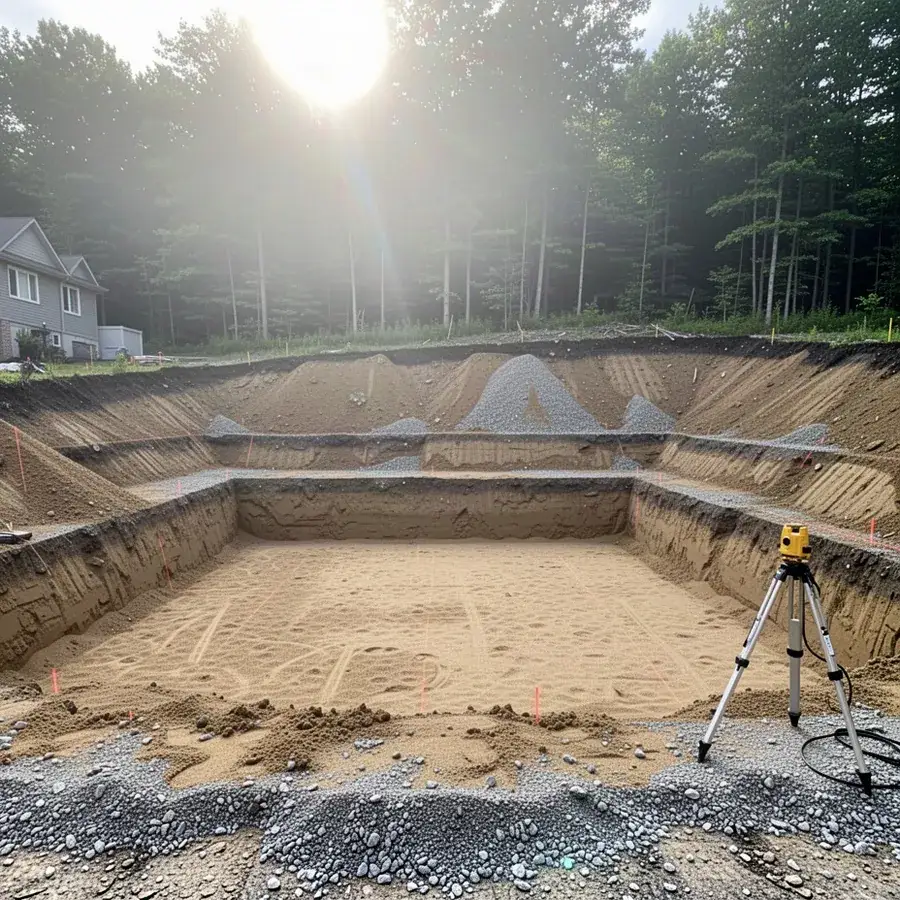
West-end lots and Uptown infill sites both need careful foundation digs in loose sand. We stake from the survey, slope or bench the walls, fine-grade the footing base by laser and keep the clean sand on site for backfill where the engineer allows.
See our foundation excavation in Waterloo for how we sequence the dig with the footing and wall crews.
Basement Lowering
Many older Uptown homes have low basements, too low for a legal unit or comfortable living space. Lowering the floor means digging below the existing footings, which must be underpinned or bench-footed first.
Our underpinning and shoring for Waterloo basements follows engineered drawings and works in short sections that suit sandy soil.
French Drains for Wet Waterloo Yards
Sand usually drains well, so a wet Waterloo yard often points to a clay lens, a high spot in the water table or grading that sends water toward the house. A French drain of perforated pipe in clear stone wrapped in filter fabric intercepts that water and carries it away.
Our drainage excavation in Waterloo starts by finding where the water comes from, then routes it to a legal outlet rather than a neighbour's yard.
Trenching for Garages, Pools and EV Chargers
Detached garages, backyard units, pool equipment and EV chargers all need buried power, and often water or gas too. We dig the trench to the required depth, bed the conduit in sand and backfill once the inspection is done.
The electrical connection is made by a licensed electrical contractor under an Electrical Safety Authority (ESA) permit. Our utility trenching in Waterloo is scheduled around that inspection so the trench is not left open.
Getting to Waterloo From Cambridge
Waterloo job sites are about 25 minutes from our Cambridge yard. We take Highway 401 to Highway 8 and then the Conestoga Parkway, which runs around the city and gets us close to most neighbourhoods.
The north and west ends sit near the edge of our roughly 30-minute service radius, so we group visits there where possible. That keeps travel time off your invoice.
Phones are answered 7 days a week: Monday to Saturday 7:00am to 9:30pm and Sunday 9:00am to 9:00pm.
Our Waterloo Service Area
Fennex crews reach most Waterloo job sites in about 25 minutes from our yard at 725 Briardean Rd in Cambridge, and we are open seven days a week.
Homeowners and builders here rely on our residential excavation services, while developers, property managers and contractors book our commercial excavation services.
See every community we cover on our excavation service areas page.
Waterloo Excavation FAQs
Is digging harder in Waterloo's sandy soil?
It is not harder to dig, but it is harder to keep open safely. Moraine sand caves quickly, so walls deeper than 1.2 m (4 ft) must be sloped, benched or supported with a trench box under O. Reg. 213/91.
That means wider holes, more room on the lot for the cut and careful protection of neighbouring footings.
Is my property in a wellhead protection area?
Enter your address in the Region of Waterloo's TAPS map, which shows wellhead protection areas and the policies that apply. Many Waterloo properties are inside one of the four zones around municipal wells.
If yours is, your building permit needs a Section 59 Notice, and some activities such as fuel or chemical storage may be restricted.
Can you lower the basement in an older Uptown home?
Yes. We lower basements in older Uptown homes using engineered underpinning or bench footings, dug in short sections so the house stays supported.
The work needs a building permit and engineer's drawings, and we coordinate the dig with your structural engineer.
Do you work in north Waterloo and near Conestogo?
Yes, north Waterloo is within our service area, though it is one of the longer drives from Cambridge. Conestogo is in Woolwich Township, which we also cover.
For jobs north of the city see our page on excavation in Woolwich Township.
Start Your Waterloo Project
Waterloo's sand, wellhead rules and creek-side regulations reward a crew that plans ahead. Book a free site visit and we will check the soil, the TAPS and GRCA maps and the permits, then give you a clear written quote.
Call us 7 days a week, with evening hours until 9:30pm Monday to Saturday.
- Fennex Cambridge Excavation Pros
- 725 Briardean Rd, Cambridge, ON N3H 4R6
- +1 226-894-8631
- info@fennexexcavation.ca
- Mon to Sat 7:00am to 9:30pm
Sun 9:00am to 9:00pm